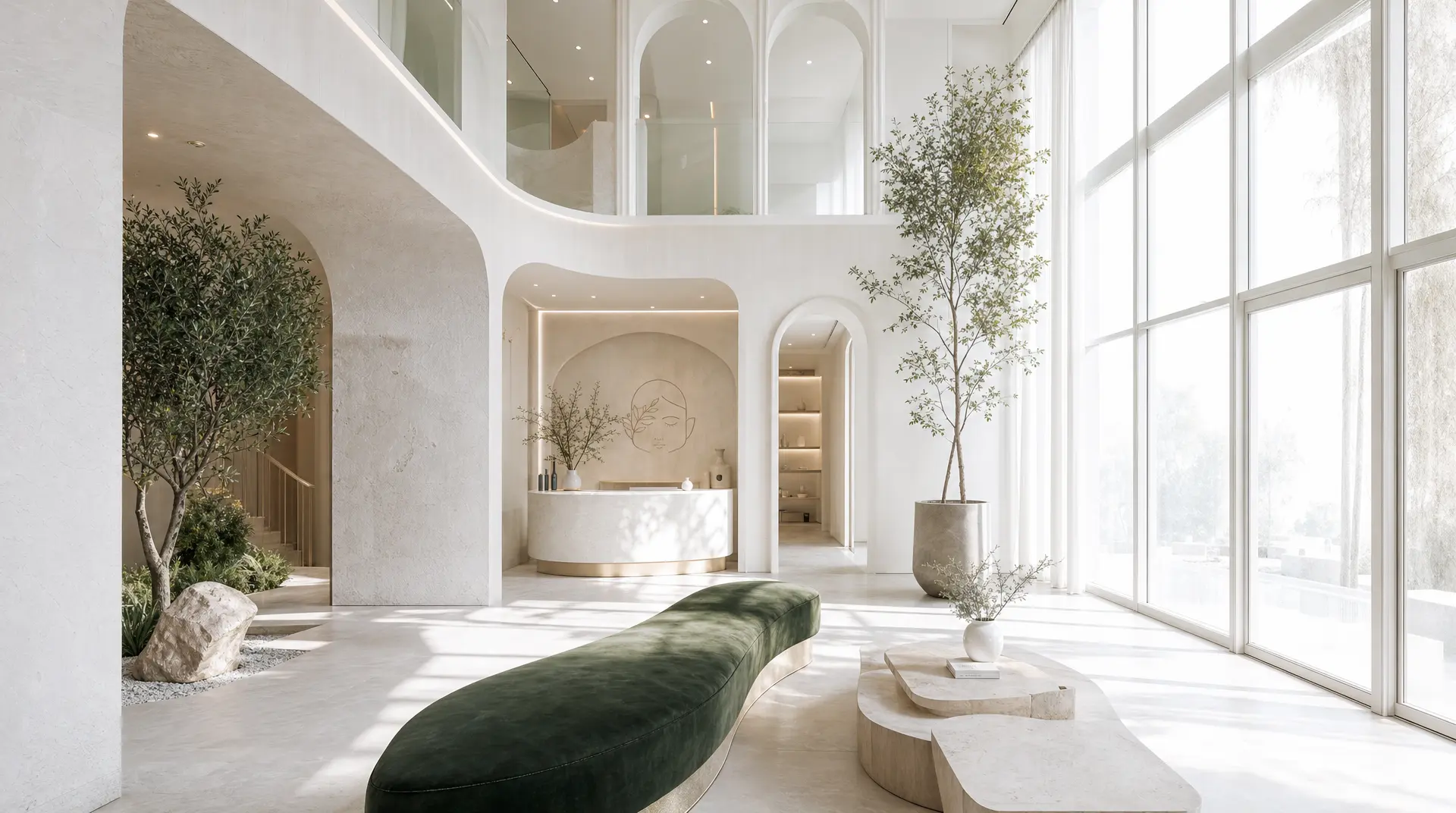
I see the same mistake again and again in head spa design. The room is bright white. The light is harsh. The finishes are flat. Everything feels clean, but the space feels cold.
That is a problem.
A head spa is about release. People come in tired, overstimulated, and stressed. They want comfort. They want quiet. They want to feel better before the treatment even starts. If the space feels like a clinic, the design is already working against the experience.
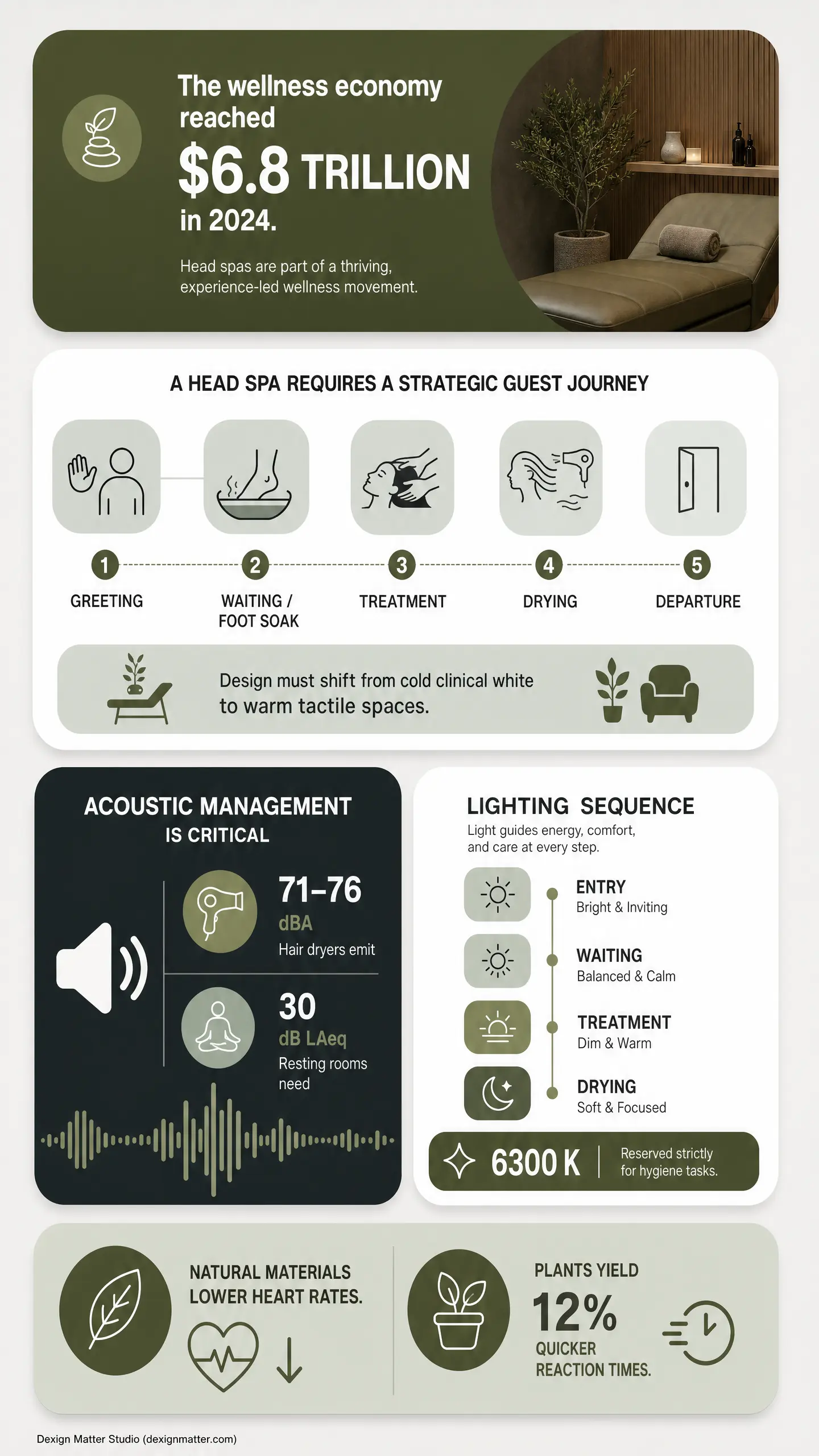
And this matters more than ever. According to Global Wellness Institute data, the wellness economy reached $6.8 trillion in 2024 and grew 7.9% in one year. The spa industry hit $157.4 billion, personal care and beauty reached $1.35 trillion, and there were 201,861 spa businesses worldwide. So if you are building a head spa today, you are building inside a huge experience economy.
That changes the design brief.
You are not just fitting shampoo bowls into a leasehold. You are building a destination. You need a space that calms people down, supports operations, photographs well, and brings guests back. You need a multi-layered, stimulating sensory experience, but in a softer voice.
For me, the point of a head spa is simple. People need to feel relaxed and comfortable. That is where the design starts.
Key Takeaways
- Small-footprint spas can improve room turnover efficiency by 10 to 15 minutes simply by isolating hair-drying areas from the primary treatment rooms.
- Commercial hair dryers generate 71 to 76 decibels of noise, severely disrupting the 30-decibel indoor acoustic threshold recommended by the World Health Organization for rest-focused rooms.
- Head spa treatment rooms benefit from low color-temperature lighting to settle the nervous system, while staff hygiene zones require 4000 K – 6300K lighting for optimal task performance.
- Integrating nature sounds into a wellness space acoustic strategy accelerates human stress recovery by 9 to 37% compared to environments exposed to traffic noise.
- Introducing interior plants into windowless wellness spaces lowers blood pressure and yields 12% quicker reaction times.
- Before importing head spa equipment, always verify that it carries a recognized Canadian electrical approval mark, such as CSA, cUL, or cETL. Unapproved equipment may fail inspection and delay commercial build-out.
Clean Does Not Have to Feel Cold
A lot of people still think hygiene means white walls, glossy surfaces, and a clinical mood. I do not design that way.
Cleanliness is about performance. It is about the material doing its job properly. In Ontario, the rule is clear. Surfaces need to be smooth, impermeable, easily cleanable, in good repair, and sanitary. That does not mean the space has to feel medical.
So when a client is hesitant, I explain it very directly. Beige can still be clean. Texture can still be clean. Warmth can still be clean. You just need the right material and the right finish.
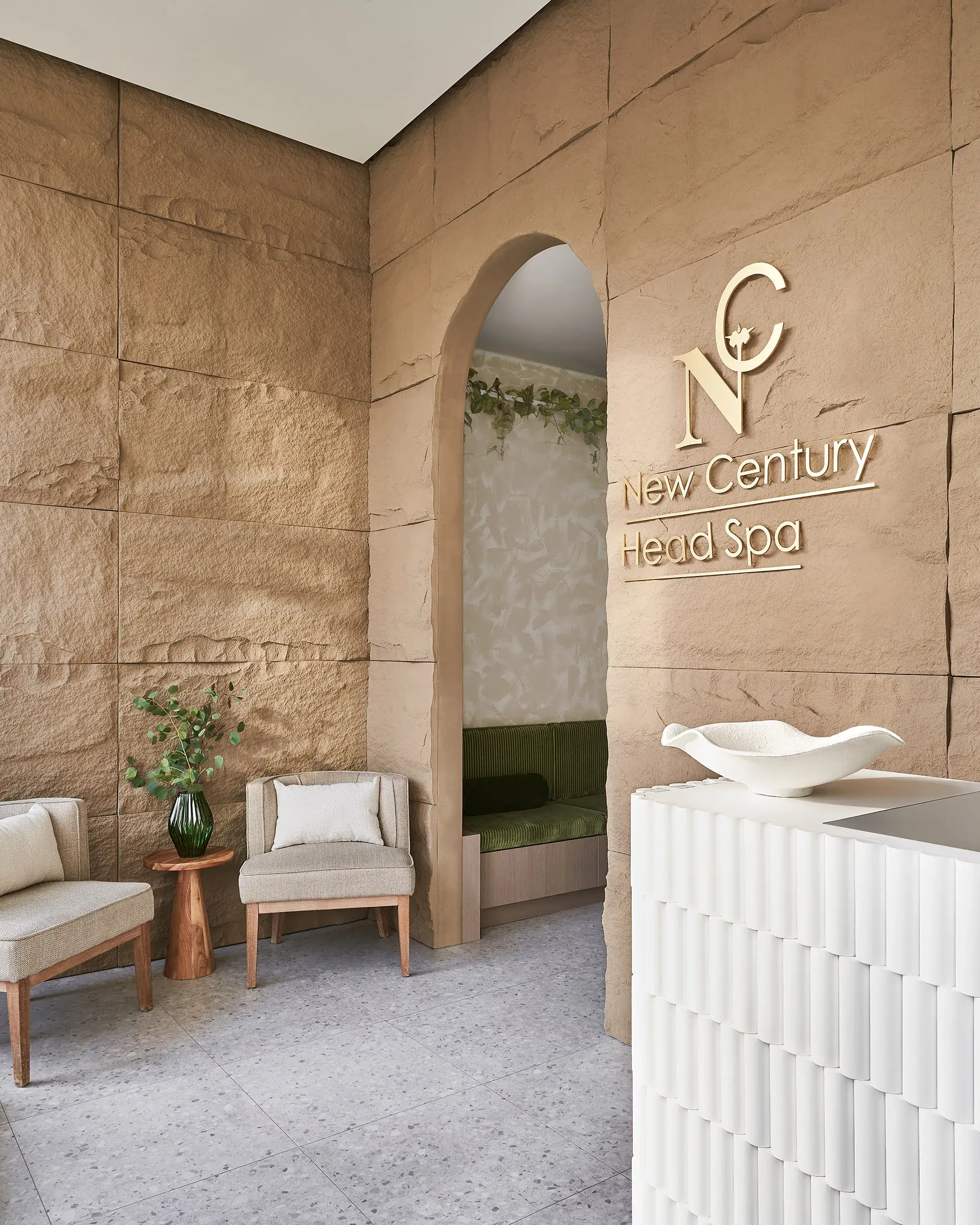
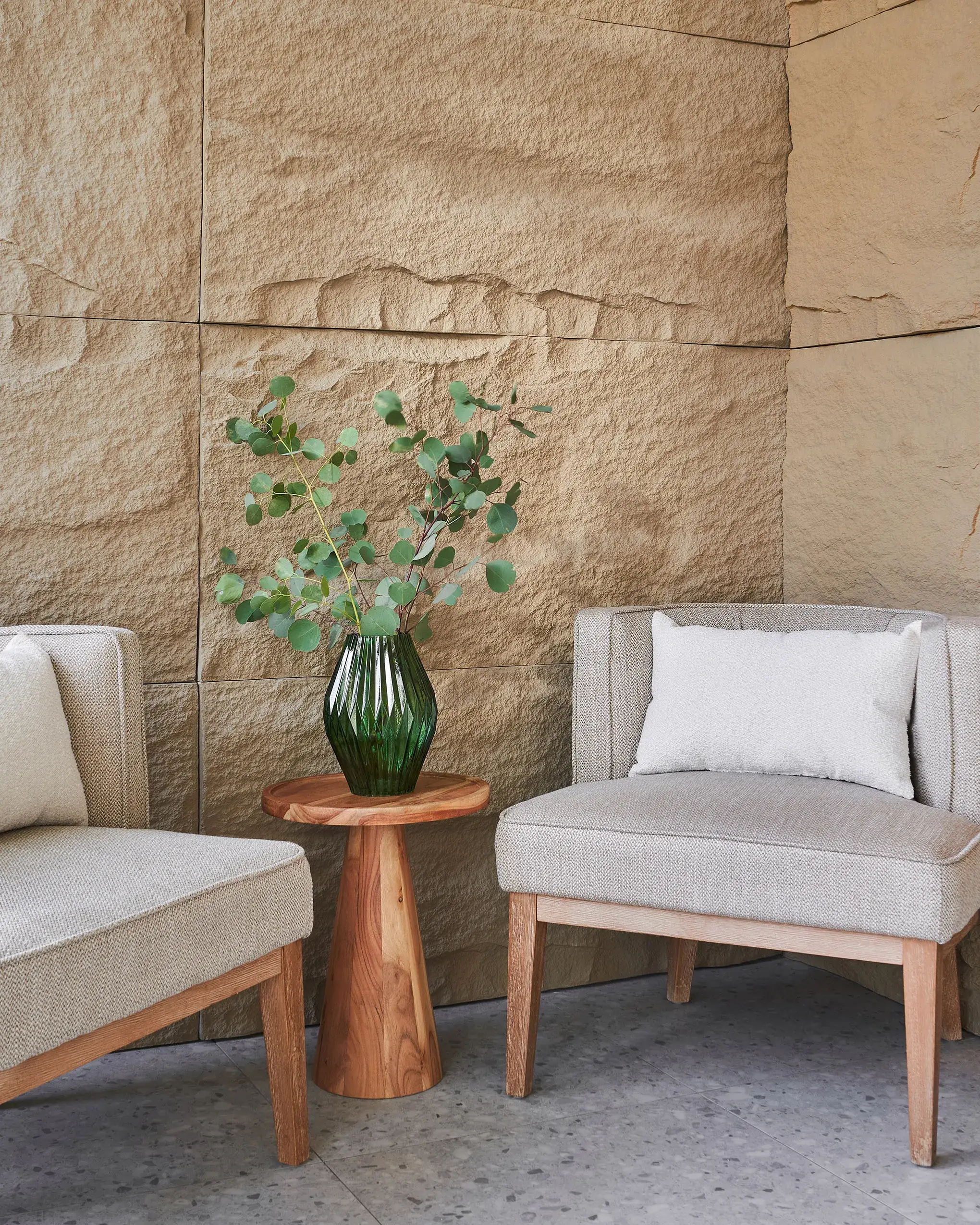
I had that exact conversation at New Century Head Spa. The client did not have experience in this type of space, so I suggested a warm tone instead of stark white. We used a rough beige stone expression at reception and in the waiting area. Then we carried tone-on-tone texture into the waiting and foot-soaking zone. The whole room felt calmer right away.
That shift matters. White often feels cold in a wellness setting. Warm beige feels cozy. It helps the body settle.
A head spa should never feel tense. It should feel welcoming from the first step.
Start with the Journey, Not the Decor
I love curating spaces, dressing up walls, and adding finishes. But I never start there, I start with the layout.
I always think step by step. How does the guest enter? Where do they pause? Where do they move next? Where does privacy begin? Where do staff circulate? Where does the treatment feel protected?
That is the real structure.
I always say the structure is like the human body. You have to have a good structure and then you put on your coat. A head spa is the same. If the planning is weak, no finish can save it.
If you come from experiential retail, hospitality, or concept venues, you already know this. Different zones can have different moods, but they still need one story. You cannot let the experience break in the middle. In my work, branding, story, and interior design always tie together.
A head spa also needs zoning with restraint. You can have a warmer entry, a calmer waiting area, a dim treatment room, and a brighter service zone. But they have to connect. The guest should feel a smooth transition, not whiplash.
I also think a lot about how to keep the concept sophisticated. This is where some wellness spaces go wrong. They push a theme too hard and the room starts looking literal. I do not design that way. If I want a rainforest feeling, I do not turn the room into a movie set. I use warm stone, soft green, filtered light, texture, and sound. I keep the story abstract. That keeps it elevated.
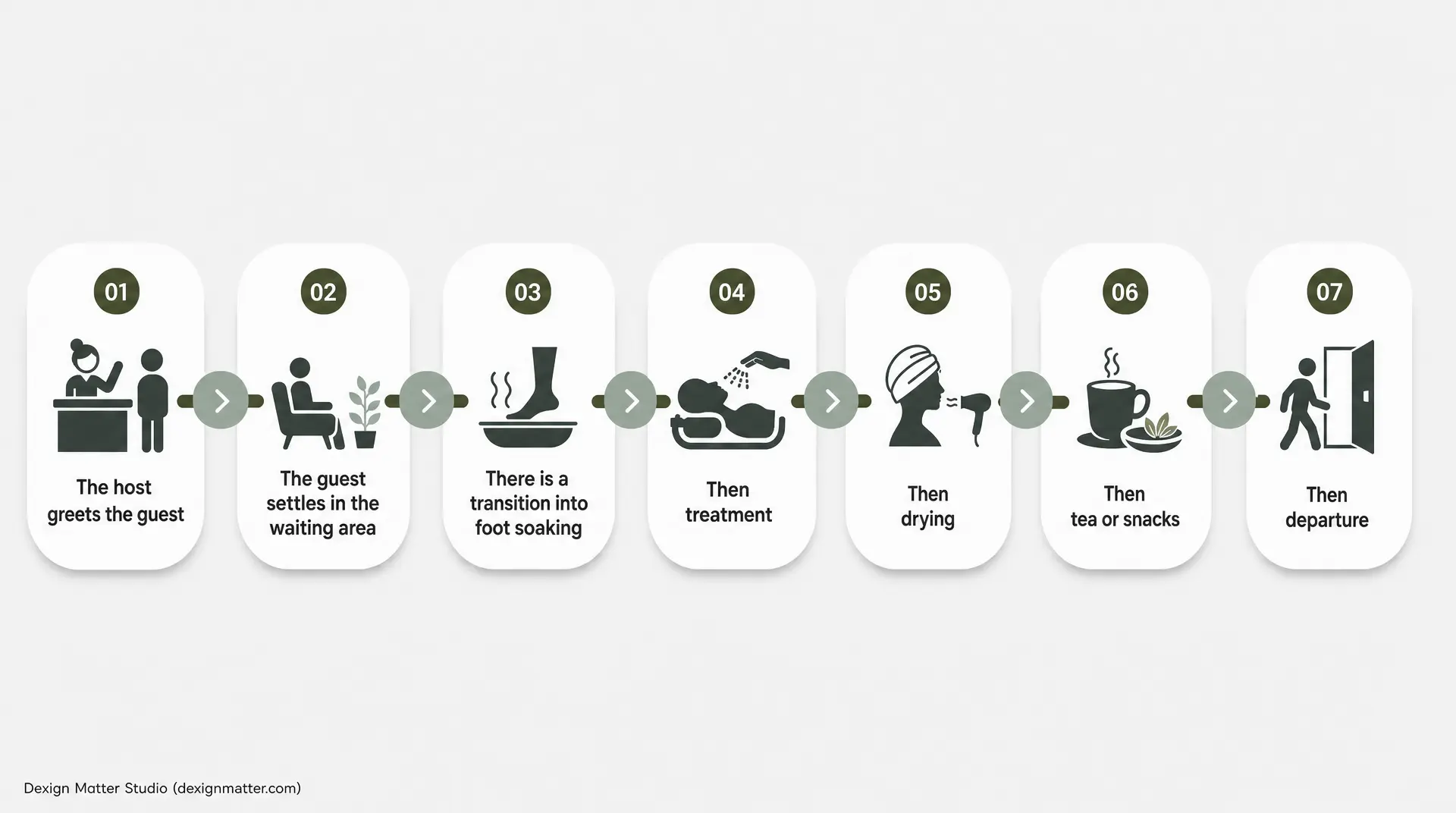
For me, the ideal head spa flow is very clear. The host greets the guest. The guest settles in the waiting area. There is a transition into foot soaking. Then treatment. Then drying. Then tea or snacks. Then departure. When this journey is smooth, the guest feels cared for all the way through.
New Century Head Spa: Small Footprint, Full Experience
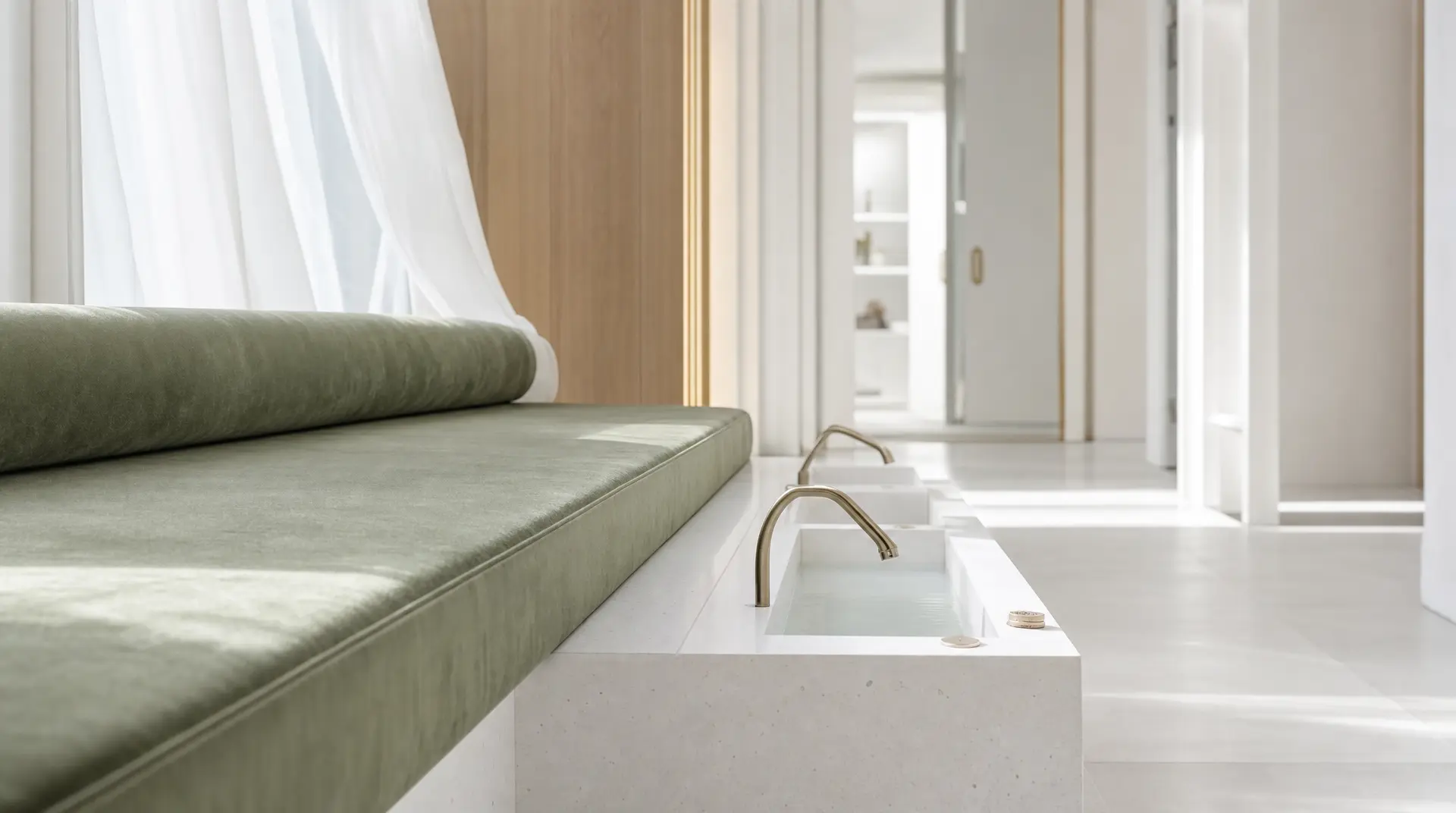
New Century Head Spa is a very good example of how I think.
The footprint was only 900 square feet. But the brief was big. We needed four private treatment rooms, six shampoo stations, reception, waiting, foot spa, staff space, laundry, storage, and an accessible washroom.
In a space like that, you cannot waste anything. I do not waste any single inch and single square feet.
So I played the layout in a clever way. Two treatment rooms were connected with sound-insulated pocket sliding doors. When the doors are closed, the rooms feel private. When the doors open, the spa can serve a larger group. The hidden hardware keeps the look clean. The door finish matches the wall, so the flexible system does not feel cheap or clinical.
At the front, I designed a long green velvet bench. That bench is the waiting area, but it is also the foot-soaking zone. So before guests move into treatment, they can warm up and relax there. It saves space, but more importantly, it improves the emotional transition.
This is what I mean by a space in a space. The guest feels they are moving deeper into the experience.
I also separated the hair-drying function from the treatment rooms. This is very important for operations. Drying can easily add another ten to fifteen minutes. If the client stays in the treatment room for that whole time, you slow down the turnover and create traffic problems.
So at New Century, guests move to a nearby drying area after treatment. The staff still serve tea and snacks there. The client still feels pampered. But now the treatment room can reset faster for the next booking.
That is good design to me. I never compromise the function. The space has to look good, but it also has to work in real life.
Materials Should Feel Warm and Work Hard
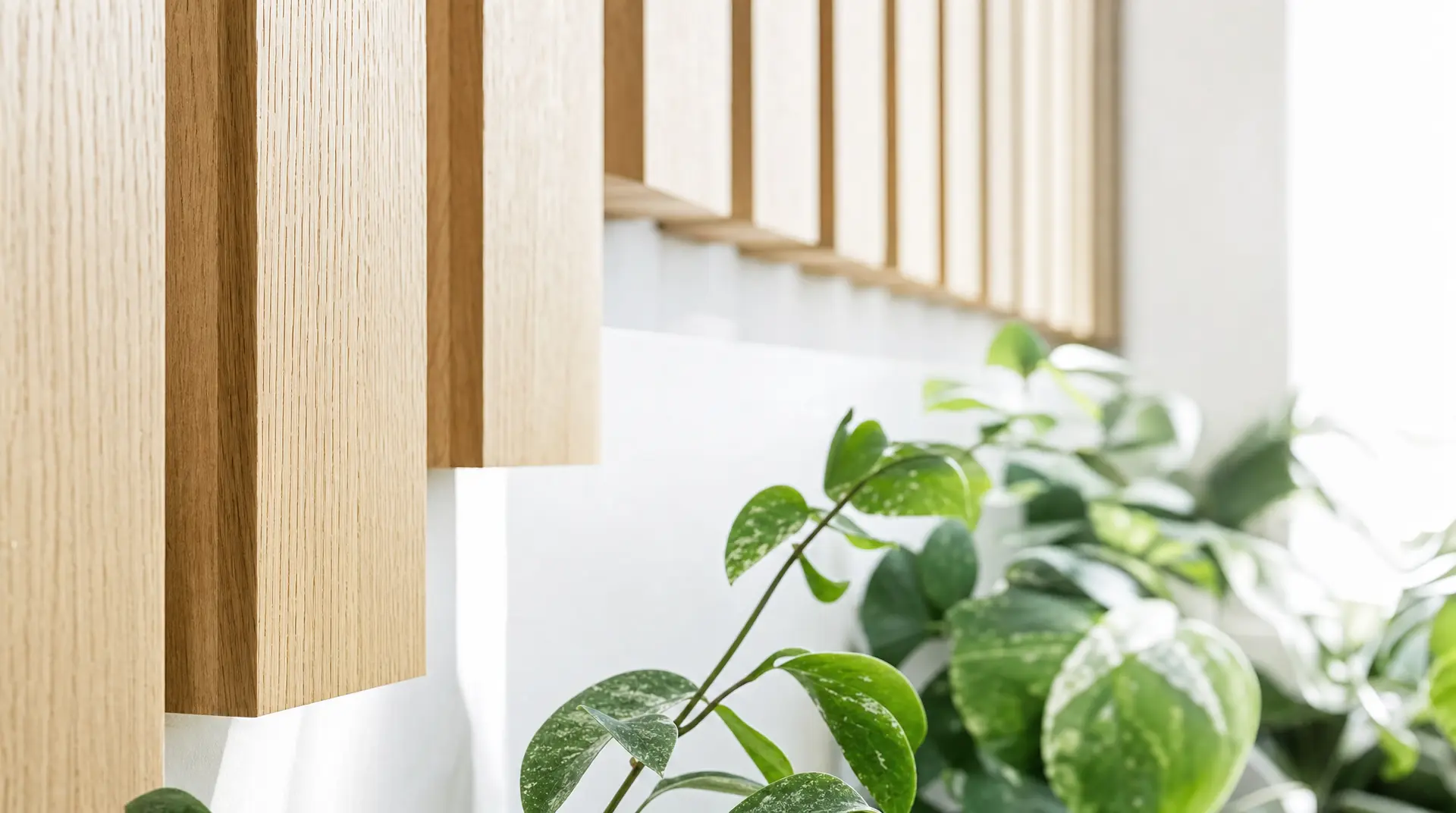
Material is a game player in a head spa. It has to carry mood, durability, hygiene, and brand all at once.
People often assume tactile materials will fail in a wet environment. I do not agree. Usually, the real problem is choosing the wrong material or putting the right material in the wrong place.
In wellness spaces, I use waterproof artificial stone cladding when I want the look of clay stone or a rough natural finish. I also use washable textured paint that can perform in moisture-heavy areas. That lets me create warmth and depth without creating a maintenance problem.
At New Century, I layered beige stone, textured paint, warm wood, soft green velvet, gold trim, and artificial plants. That mix created a quiet rainforest feeling. The palette stayed controlled. The texture did the heavy lifting.
Back-of-house was different. I kept that area more functional. Front-of-house carried the emotional side of the experience. But I still designed them together, because guest comfort and staff workflow always connect.
There is also strong evidence behind this kind of material thinking. A study on curvilinear interiors found that people were more likely to judge curved rooms as beautiful. That is one reason I like arches and soft geometry in wellness spaces. Another study showed that touching uncoated wood calmed brain activity and lowered heart rate compared with more artificial, mirror-like finishes.
Even greenery helps more than people think. In a windowless room, interior plants led to 12% quicker reaction times and lower blood pressure. People react to natural cues very fast. They may not say it out loud, but their body feels it.
That is why I keep pushing for warmth, texture, and softness in wellness design. Those choices are not decoration only. They support the whole experience.
Lighting Should Change with the Ritual
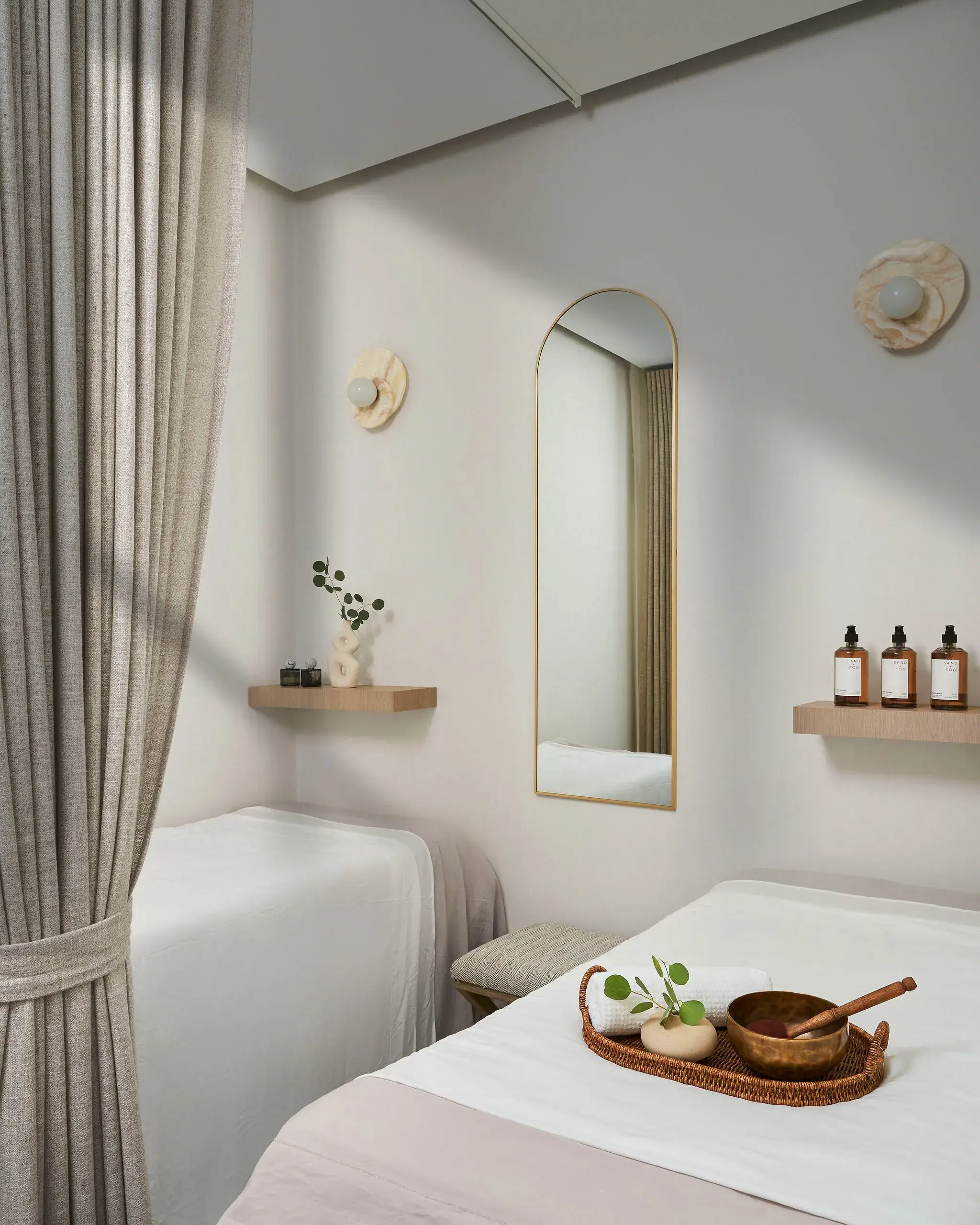
Lighting is another place where head spas often lose the mood.
If every zone has the same brightness, the same temperature, and the same glare, the space feels flat. It also feels tiring.
I do not use one lighting mood for the whole project. I want the light to change as the guest moves through the space.
Reception and waiting can take more brightness. Natural light is good there. It helps the space feel fresh and open. But in treatment rooms, I usually try to avoid strong natural light. I want guests to close their eyes and release. I do not want the room keeping them alert.
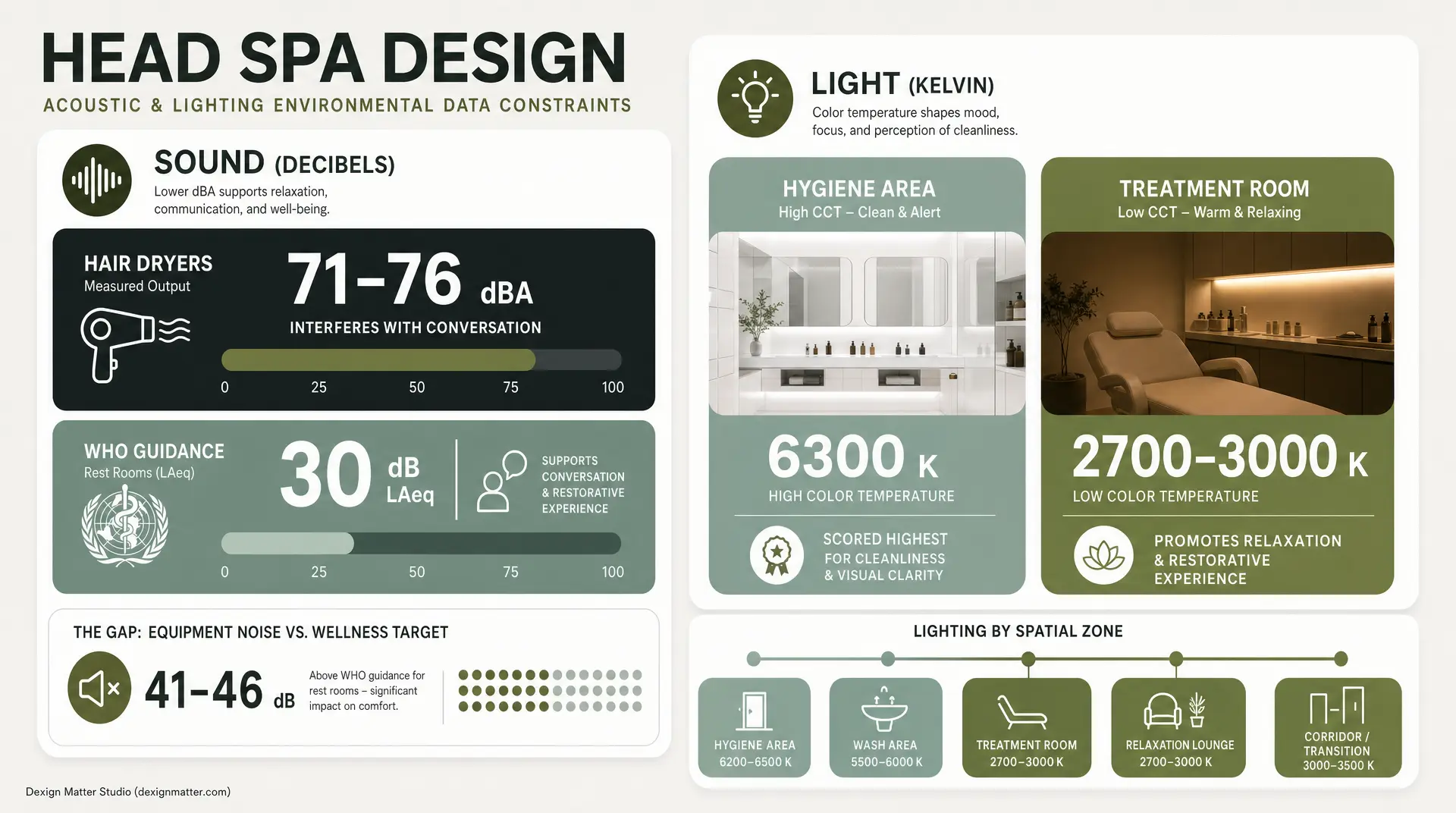
A lighting study found that low color-temperature light helped the nervous system settle more smoothly than cooler light. That lines up with how I already work. In wellness spaces, warmer light supports relaxation better.
I also believe in a sequenced lighting strategy. The CIE lighting guidance supports much lower exposure later in the day instead of one brightness level everywhere. So I let the entry stay brighter, the waiting zone soften, and the treatment room dim down.
At New Century, I used a special star-sky projector in the treatment rooms. When the staff dim the room, the light projects softly on the wall and ceiling. The guest feels like they are under the sky. That small move changes the psychology of the room.
Service and hygiene zones are different. Those areas are task-driven. A study on hygiene-area lighting found that 6300 K scored highest in that kind of setting. So yes, staff zones can go brighter and cooler when needed. Treatment and decorative lighting should stay warm and calming.
That balance is what makes the whole spa feel intentional.
Sound Is a Hidden Finish
A quiet room does not happen by luck. You have to build it into the design.
Hair dryers are one of the biggest problems in head spa planning. Research has measured them at 71 – 76 dBA, which is enough to interfere with conversation. At the same time, the WHO guidance for rest-focused rooms points toward around 30 dB LAeq indoors, with treatment-room noise kept as low as possible.
So if the drying zone sits beside a treatment room with no real acoustic control, the guest will absolutely feel it.
That is why I separate noisy functions whenever I can. At New Century, I used a dedicated drying transition area, low-noise equipment, insulation inside the walls, insulation above the ceiling, and acoustic panels to absorb sound.
Music matters too. Nature sound can change how quickly the body recovers from stress. One study found 9 – 37% faster recovery with nature sound than with traffic-heavy noise. So when I think about a head spa, I do not only think about what people see. I think about what they hear.
Sound is part of the treatment.
Spend on the Feeling, Then Value-Engineer Smartly
A lot of clients think premium price has to come from more equipment, more screens, more tech, more shiny things. I do not think that way.
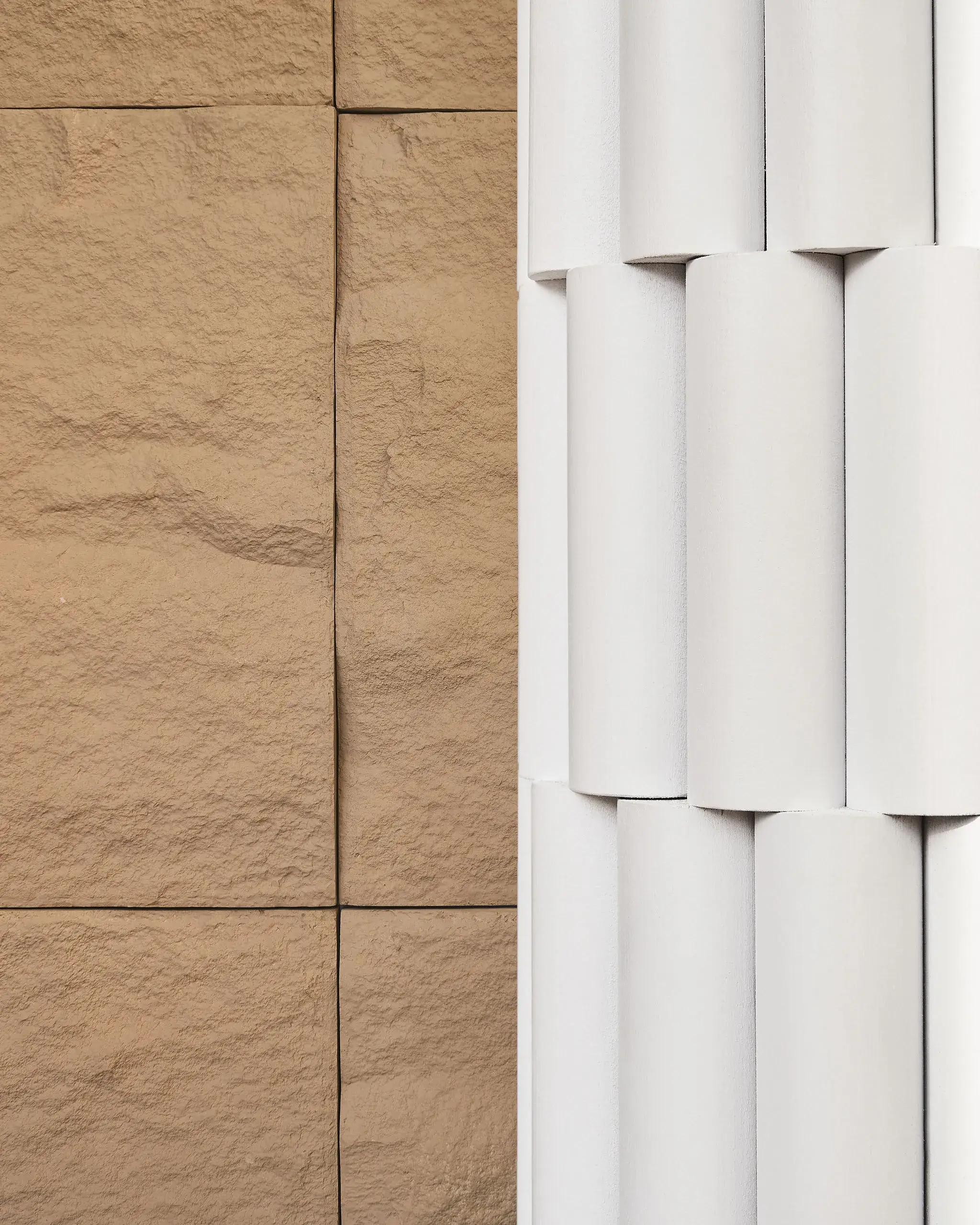
In a head spa, perceived value often comes from slower and softer design moves. A sculptural reception desk. A warm stone wall. A beautiful arch. A waiting area that feels rich the moment you sit down. These things hold the memory of the space.
At New Century, I reduced cost in some material areas, but I kept the key emotional moments strong. The 3D layered reception desk became a major focus point and read almost like a freestanding sculpture. The rough stone wrapping the waiting area gave the room weight and texture. The arches made the space feel softer and more layered.
This is always the budget conversation for me. You have to know where you can save and where you must spend.
I usually protect the arrival moment first. Then the main feature. Then the guest transition points. After that, I value-engineer carefully. A man-made stone can replace a more expensive natural one. A washable textured finish can replace a delicate wall treatment. The story can still stay strong if the design thinking is strong.
You do not need to throw money everywhere. You need to spend with intention.
Solve the Real-Site Problems Early
Before you sign a lease for a head spa, bring your designer or architect to the site. I mean before, not after.
I want to see the electrical panel. I want to check drainage. I want to know if the floor can handle what the business needs. I want to see the beam locations, the ceiling height, and the back-of-house possibilities. These things decide whether the business model will really fit.
Time is revenue in commercial work, so in my studio I like to move concept design, finish selection, and technical documentation forward together. But speed only works when the site reality has been checked properly from the beginning.
AI can make a pretty rendering. That is easy now. But AI will not tell you whether your imported shampoo station can pass inspection, or whether a hidden beam will block the piping.
I had one spa project where a basement beam prevented floor trenching. We could not run the plumbing in the usual way. So I rerouted the piping above the floor and hid it inside custom millwork. The visual line stayed clean because we solved the problem in the detailing.
Imported equipment needs that same level of control. Before a client buys anything overseas, I verify the plumbing and electrical specs with the vendor. In Canada, Health Canada advises using products with CSA, cUL, or cETL certification marks. In a water-heavy business, that check is not optional.
A beautiful space still has to pass inspection. It still has to open. It still has to run smoothly.
Final Thought
For me, a head spa should never feel clinical. It should feel warm, quiet, layered, and well planned.
The guest needs a smooth journey from entry to exit. The staff needs a layout that supports real workflow. The materials need to stay beautiful under daily moisture and cleaning. The lighting needs to help the body slow down. The acoustics need to protect calm.
If you are building a head spa brand today, you are building a destination in a very fast-growing market. The room has to work hard. It needs story. It needs zoning. It needs durability. It needs soul.
I always come back to the same belief. Great designs change the way how people live, dine, play, love, and experience the world. Wellness spaces deserve that same level of care.
Every space should sing and dance.
A head spa should do it quietly, but you should still feel it.
Frequently Asked Questions
How do you seamlessly integrate a quiet head spa into a noisy, high-traffic experiential venue?
You build a spatial buffer. We use transitional corridors, heavy insulation, and soundscapes to drop ambient noise to the WHO-recommended 30 dB. The guest must feel the energy shift before treatment begins. The experience cannot break.
Is a highly theatrical head spa concept financially viable within a larger retail development?
Yes, because you capture a massive consumer shift. The global spa industry reached $157.4 billion in 2024. A beautifully zoned, theatrical space drives PR and makes the venue a true destination. When the design is profound, the commercial return and brand prestige follow organically.
How do we include delicate cultural artifacts in the design while maintaining strict hygiene compliance?
By zoning art away from the splash radius. Ontario regulations require smooth, impermeable surfaces in wet zones. We place heritage pieces in glass-enclosed niches or elevate them above the operational line. This protects the narrative while keeping the active workspace entirely sanitary, efficient, and code-compliant.
How do you increase guest dwell time without creating bottlenecks in the treatment rooms?
You design secondary spaces that invite lingering. I always separate drying and tea rituals from the treatment room. By designing stunning, curvilinear lounges that people naturally find beautiful, guests relax longer. This boosts organic brand reach and dwell time while staff reset treatment rooms instantly.
How do we avoid a culturally-driven head spa concept looking like a cheap, literal theme park?
You abstract the story. Instead of literal props, we use authentic, tactile materials. For example, incorporating natural, uncoated wood physically lowers guests’ heart rates. We pair high-performance functionality with subtle, culturally-rooted textures and modern geometry. It keeps the space sophisticated, grounded, and never cheesy.