The instinct that makes you good at running a restaurant is the ability to fix problems the moment they appear. Overseas sourcing punishes that instinct.
A counter that has spent three weeks on the Pacific cannot move when you open a wall and find the plumbing sitting where the feature was meant to go.
The 40% goes to the operator who made every call while being wrong was still cheap. Nobody finds that money at the factory.
Key Takeaways
- Calculating true landed costs for imported restaurant furniture requires stacking the factory price with ocean freight, broker fees, classification-specific duties like 8% for metal showcases, and GST applied to both the goods and the duty.
- Restaurant operators must register as the importer of record through the CBSA CARM Client Portal with a nine-digit business number before paying overseas factories, retaining legal responsibility for holding shipment records for six years.
- Restaurant plumbing fixtures should be sourced locally to guarantee immediate compliance with the Ontario 2024 Building Code, which strictly mandates that public lavatory supply fittings must not exceed 1.9 litres per minute.
- Safely sourcing overseas porcelain tile requires an ASTM C373 test report confirming water absorption of 0.5% or less, alongside ANSI A326.3 slip resistance specifications tailored separately for open kitchens and grease-heavy prep lines.
- Splitting overseas restaurant orders into two separate containers allows hard finishes to arrive exactly for installation, while loose dining furniture ships a month later to eliminate storage rental costs during early drywall construction.
- Restaurant operators should allocate 10 to 20% of their interior design budget toward highly photographed feature walls or logo moments, reserving the remainder strictly for operational layout and functional flow.
How Do You Calculate the True Landed Cost of Overseas Restaurant Furniture?
The RMB figure from the factory is the first line of a longer sum. Duty comes next, and Canadian duty depends on both the tariff classification and the country of origin. China is eligible for MFN treatment but not GPT, so the classification your broker lands on decides the rate. The 2026 Customs Tariff puts some metal furniture, including metal showcases and counters, at 8% MFN, while wooden kitchen furniture sits at 9.5%.
GST is then calculated on the value of the goods plus the applicable duty, so the duty gets taxed too. The exchange rate for customs valuation is set on the day the goods begin their direct and uninterrupted journey to Canada. Not the day you paid the deposit. If the dollar moves between deposit and sailing, your landed cost moves with it.
So when I build a comparison for a client, the local millwork quote sits on one side. On the other side I stack the factory price, ocean freight, rail from Vancouver, broker fees, duty at the correct classification and GST on top of everything. If the saving survives that stack, it is real. At Richmond Hill it survived.
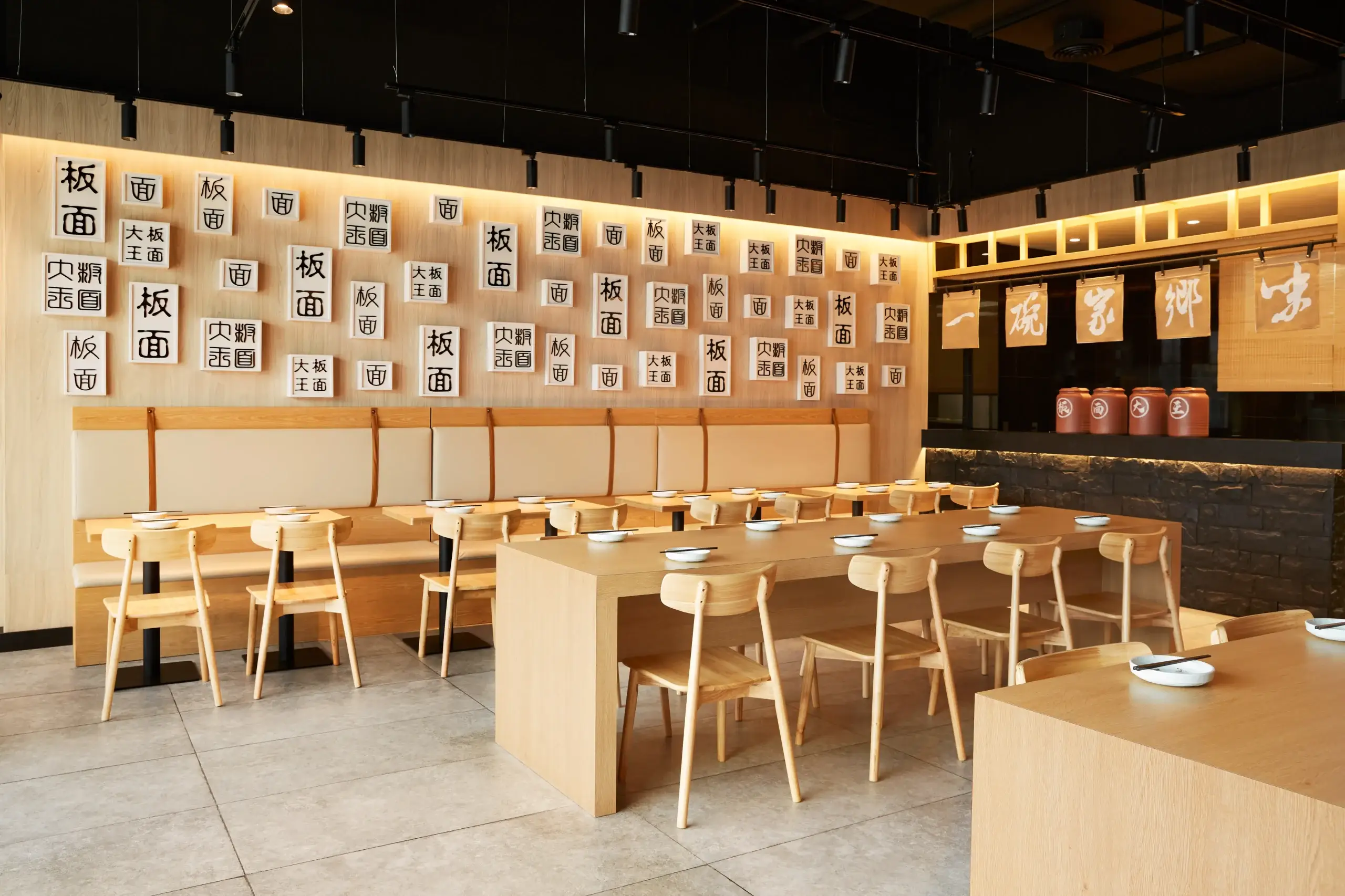
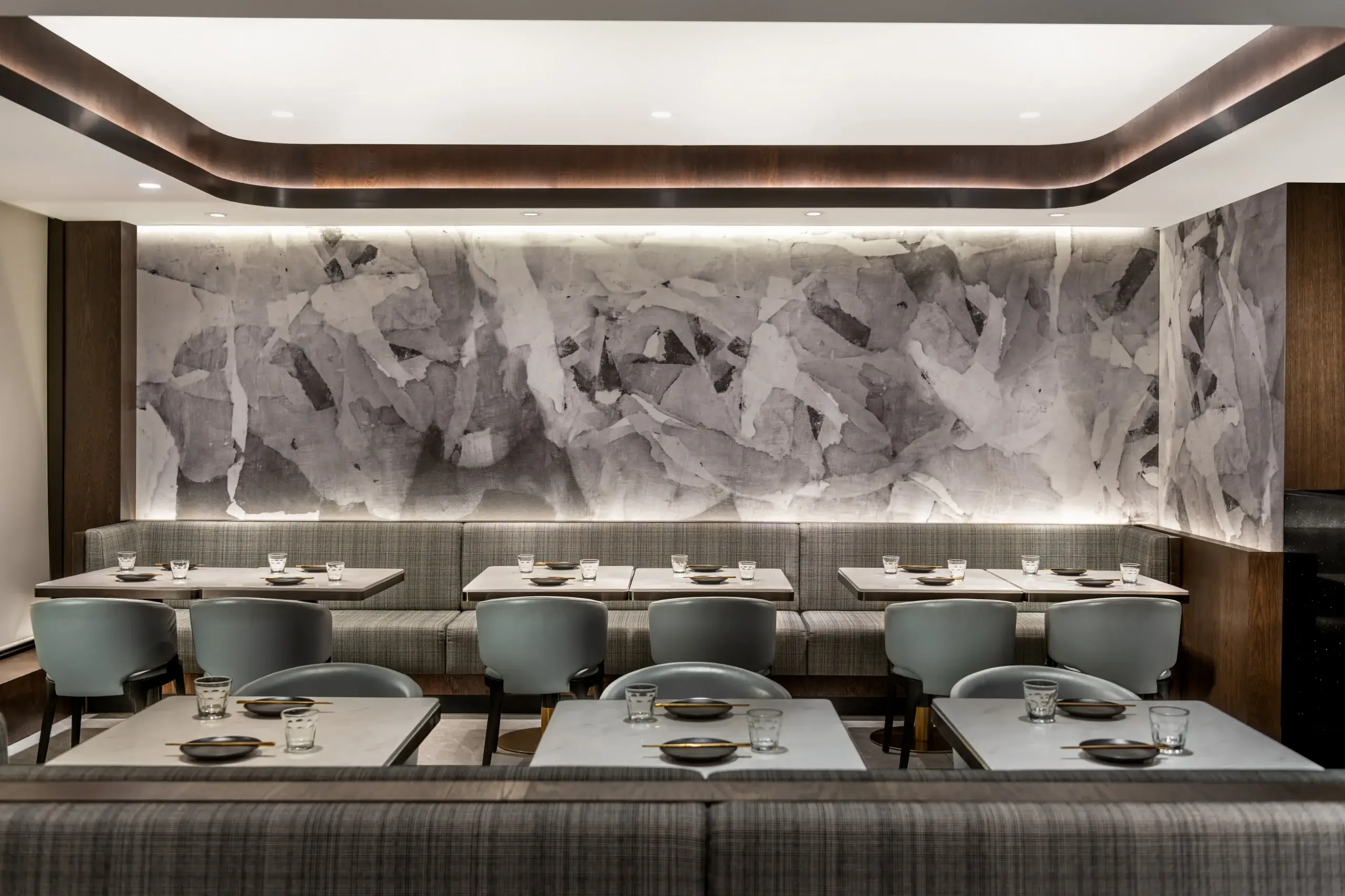
Timing protects the number too. We lived the extreme version at Yuan Chinese Cuisine, renovated during COVID with the restaurant on the verge of closing and costs climbing every month. We sourced every material, fixture and piece of furniture well before construction to lock pricing and dodge backorders. That project went on to win four international design awards.
Why Must Restaurant Operators Settle the Importer of Record Before Paying Overseas Factories?
Someone has to be the importer of record, and it belongs in the project agreement. The CBSA's setup requirements include a CARM Client Portal account, a nine-digit business number and a six-character import-program account. The importer of record owes the duties and taxes even when a broker handles the filing. The shipment records, covering origin, purchase, value and importation, have to be kept for six years after import. For a multi-location operator this is a one-time decision. Every store after runs through the same channel.
My side is the factory. I grew up in Guangdong. I worked at Red Design and led a design team at Kokaistudios in Shanghai before Toronto. Mandarin and Cantonese are my first languages, so when I send a millwork drawing to a workshop in China, nobody is translating in the middle. Every dimension on that drawing is a chance for a misunderstanding. On a piece that spends weeks at sea, a misunderstanding is expensive.
Which Restaurant Fixtures Should Never Be Sourced in an Overseas Container?
Which material you order from overseas has to play a smart role. Not everything belongs on the ship.
Lighting is the first thing I keep local, and people get the reason wrong. The rule has nothing to do with where a fixture was bought. Ontario requires that electrical products used or sold in the province carry approval from an accredited certification agency. That mark is what the inspector looks for. In my experience, buying from a Toronto supplier is the fastest way to know the mark is there. Ontario does recognize field evaluation as one approval route for eligible equipment, but I would never plan a grand opening around it. A pendant hanging dark over your bar while you wait for an evaluator is a delay nobody budgeted.
Anything that connects to water or power gets its specifications verified with the vendor before we release the order. We do this on every spa project, and a restaurant is no different. Ontario's 2024 Building Code requires supply and waste fittings to meet specified ASME and CSA standards. It also caps public lavatory supply fittings at 1.9 litres per minute, with stated exceptions. A custom vanity that lands with the wrong faucet is a beautiful object that cannot be connected.
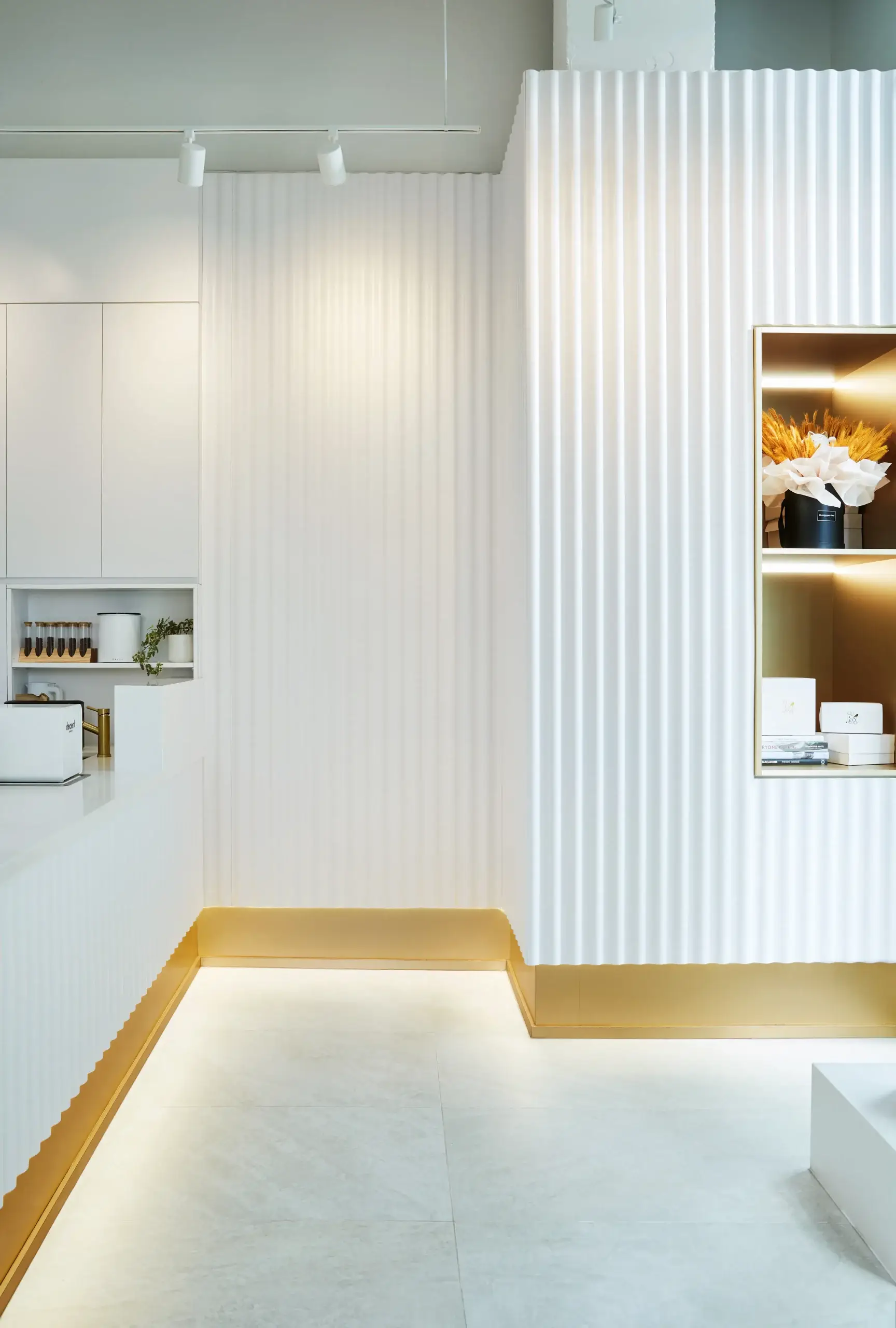
And sometimes the cheapest factory is 20 minutes from the site. At Cuckoo Cakery the wavy icing wall was specified as a prefabricated product from the United States. The quote blew the budget. We did not take the feature away. We redrew every dimension and detail ourselves and had it CNC-cut locally, which brought the price down by nearly half. The wall on site matches the rendering. So I never ask overseas or local. I ask which fabricator gives me this exact look at the lowest landed cost on the day the site needs it.
How Can Restaurants Safely Source Porcelain Floor Tile From Overseas Suppliers?
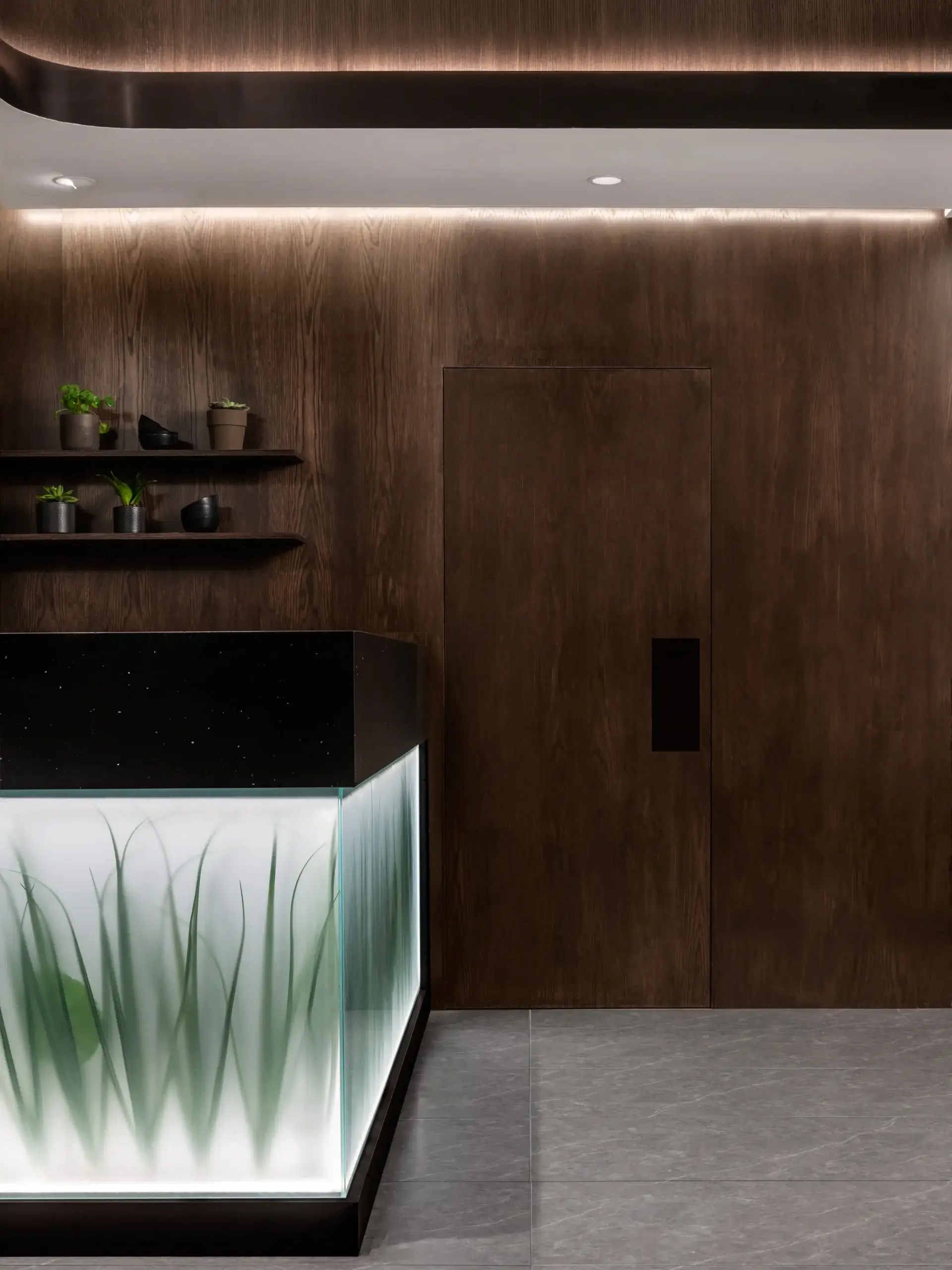
Tile is where overseas sourcing pays off fastest. Marble-look porcelain gives you the veining of natural stone at a fraction of the price, and it takes the abuse of a restaurant floor in a way real marble never will. Material is a game player here. But "porcelain" on a spec sheet is only a word. Under the standards referenced by the Tile Council of North America, porcelain tile has water absorption of 0.5% or less, tested to ASTM C373. The certification body notes that appearance alone cannot confirm it. I ask the factory for the test report before I approve the sample.
Slip resistance is the second check, and I specify it by area, not by look. The ANSI A326.3 use categories put restaurant front-of-house with an open kitchen under Interior, Wet Plus. Food preparation areas fall under Oils/Greases. TCNA also cautions that a DCOF reading on its own does not predict whether someone will slip. The dining floor in front of your open kitchen carries a different requirement from the prep line behind it. The sample that looks right for both may only be right for one.
What Is the Two-Container Rule for Scheduling Overseas Restaurant Sourcing Shipments?
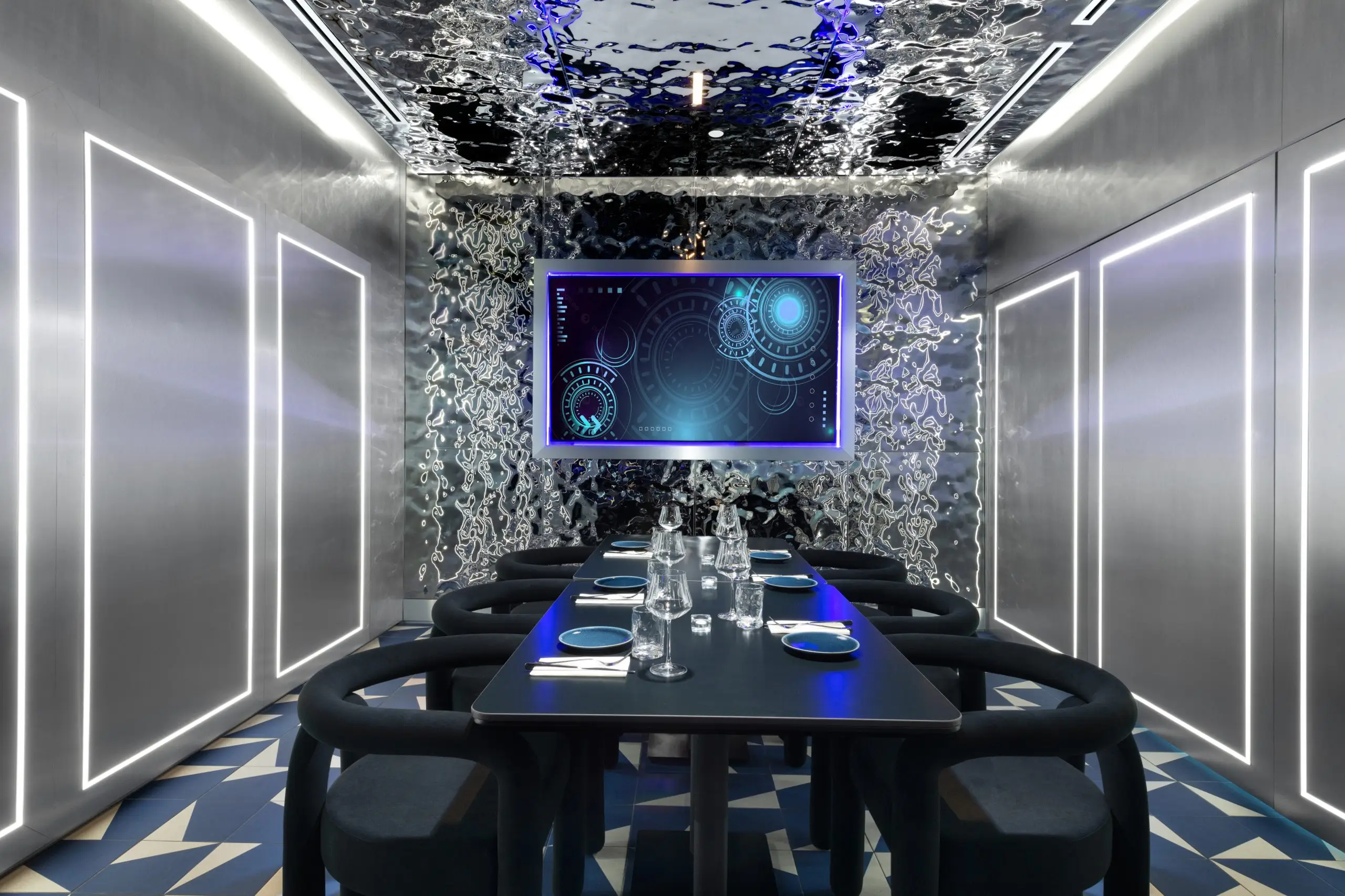
Everyone quotes "about two months" for a shipment from China. That number is right as a planning window and wrong as a transit time. A current Hapag-Lloyd schedule lists port-to-port transit to Vancouver at 20 days from Yantian and 26 days from Yangshan. The rest of the two months is factory production, container booking, customs clearance and the rail leg to Toronto. A schedule that only counts the ocean is weeks short.
I count backward from the site, and I split the order into two shipments. Tile has to arrive the week the site is ready for tile. That means it leaves the factory two months before that week, not two months before opening. Miss it and your tiler is standing in an empty room. Furniture runs the other way. Sixty dining chairs arriving before drywall means renting storage and paying to move everything twice. Loose pieces ship about a month behind the hard finishes, because nobody needs them on site during construction.
The container schedule copies our site sequence. Plumbing rough-ins first, then hard flooring, drywall and paint, millwork, lighting, and loose furniture last. We give the client two dates, this group leaves before this one and this group follows, and we book both with the shipping company.
H3 Matrix ran on this discipline. It is 4,500 square feet of restaurant, bar and performance space, with furniture and materials sourced from overseas suppliers. We built detailed production schedules, coordinated specialized contractors for each zone, and hit the opening deadline. The venue became a popular city destination and earned eight international design awards.
Why Must Restaurant Sites Be Measured Before Releasing Overseas Furniture Orders?
Operators always ask me the same thing. How do I know what arrives matches what I approved. All the control happens before the container closes, because after that there is none.
First, the drawing package has to be final before the factory sees it. Most studios take one to two months to produce one. Our in-house drawing system delivers it in two weeks or less. We also develop renderings and finish selections while the engineer works on the layout, so everything is ready the moment the permit is approved. Every week saved on documentation is a week earlier the factory starts cutting.
Second, we measure the site before we release anything. Construction always has surprises. You open a wall and find plumbing exactly where the feature wall was going. On one residential demolition we found a structural beam between the family room and the kitchen that nobody expected. We built it into the custom cabinetry. A counter that spent three weeks on the Pacific has none of that flexibility. Measure, confirm conditions, then release the shop drawings.
What Are the Restaurant Operator's Responsibilities During Overseas Furniture Sourcing?
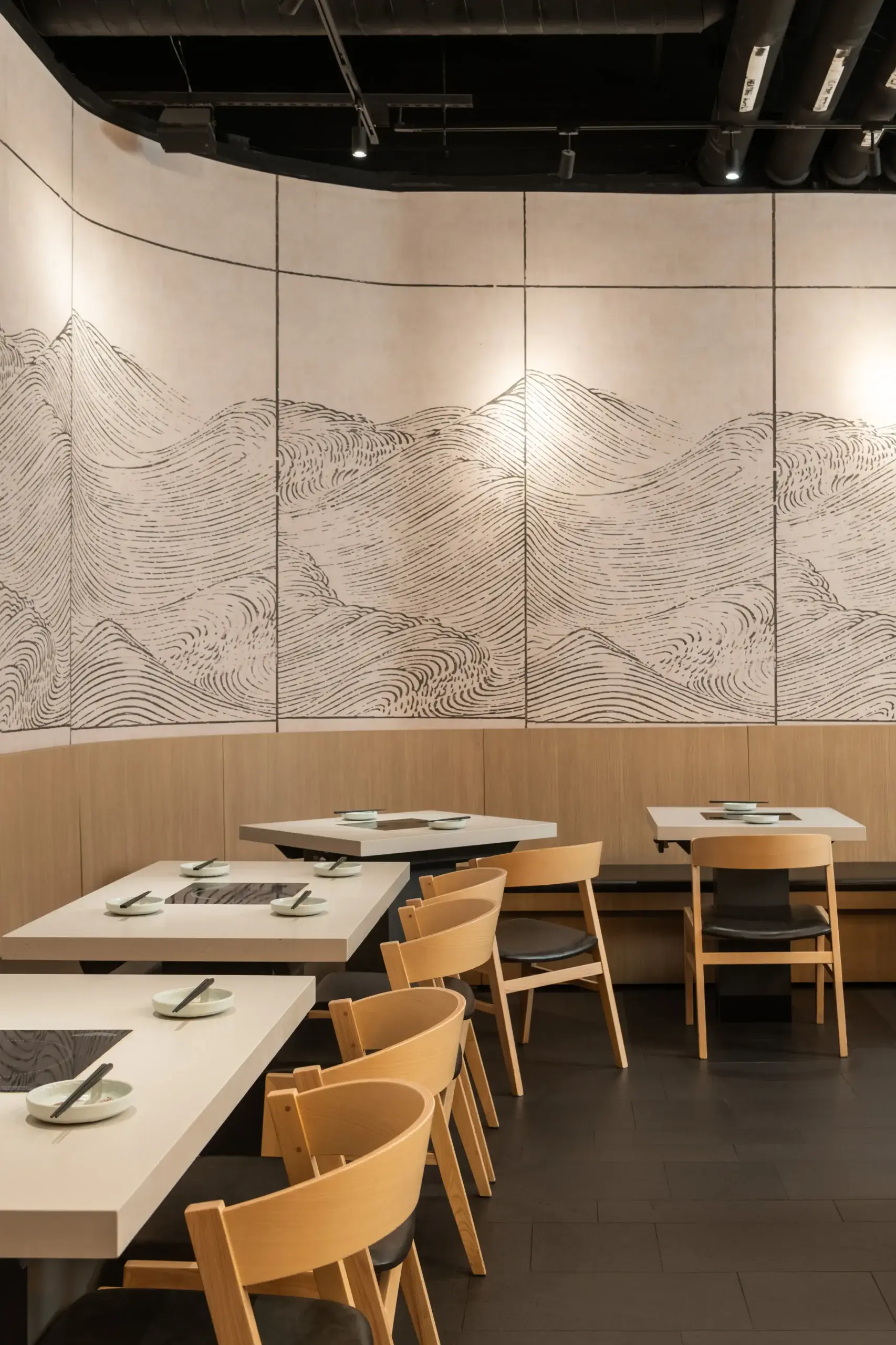
Very little, if the project is set up properly. The Haru Shabu Shabu client had minimal involvement because they were busy running their other restaurant locations. The contractor followed our detailed drawings and we handled every daily decision. You approve the schematic design and the materials. Then you go run your business.
I ask one thing in return. Changes after construction documentation cost money. With overseas sourcing they cost double, because the factory has already cut your counter. We will always give you a transparent analysis of budget and schedule before proceeding with a late change. But the cleanest projects are the ones where decisions get made while they are still cheap.
We also partner with construction teams that use their own in-house crews rather than outsourced labour. That is the only way I can trust a container date. If a delay lands anyway, we plan a soft opening at 90 to 95% completion. Your kitchen finds its flow before the grand opening crowd arrives.
How Can Restaurant Operators Turn Overseas Sourcing Into a Scalable Franchise Formula?
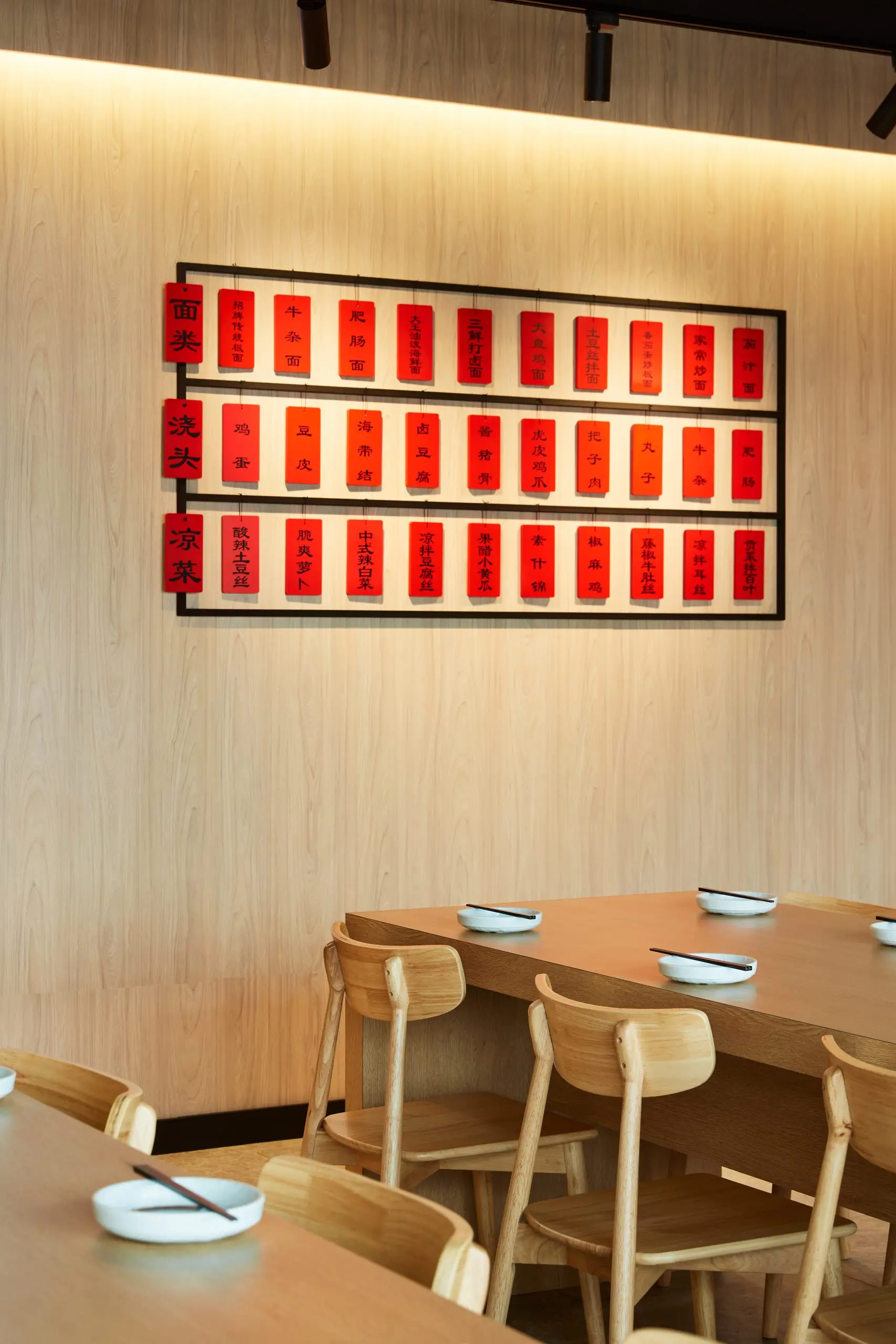
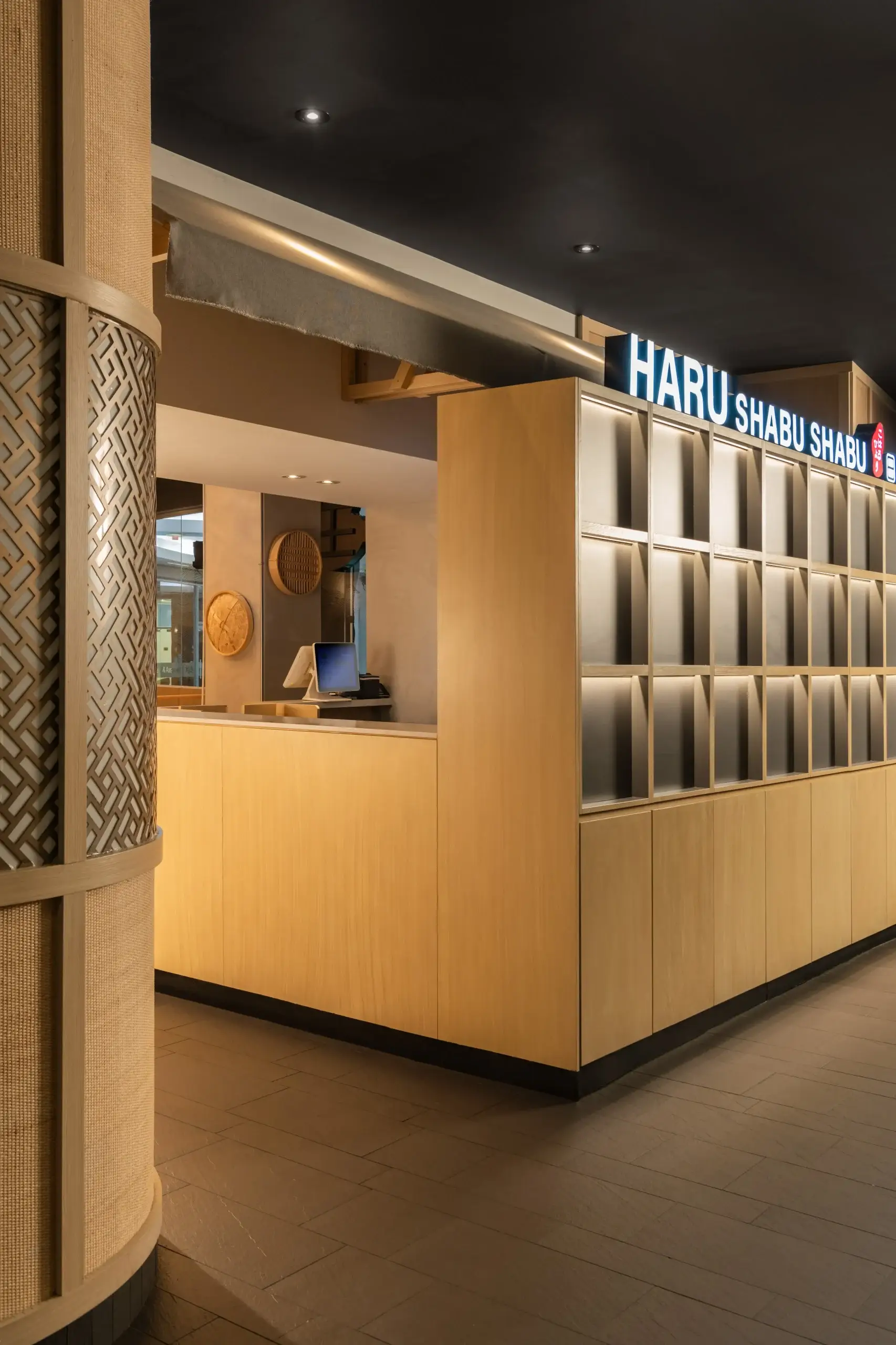
If you are on location two or 10, the sourcing package becomes an asset. At Richmond Hill we carried the key elements from North York and added rice-paper signage at the entrance, grey brick walls and a fabric sign above the counter. Every custom piece is documented in the drawing package, so the next store starts from a finished spec instead of a blank page.
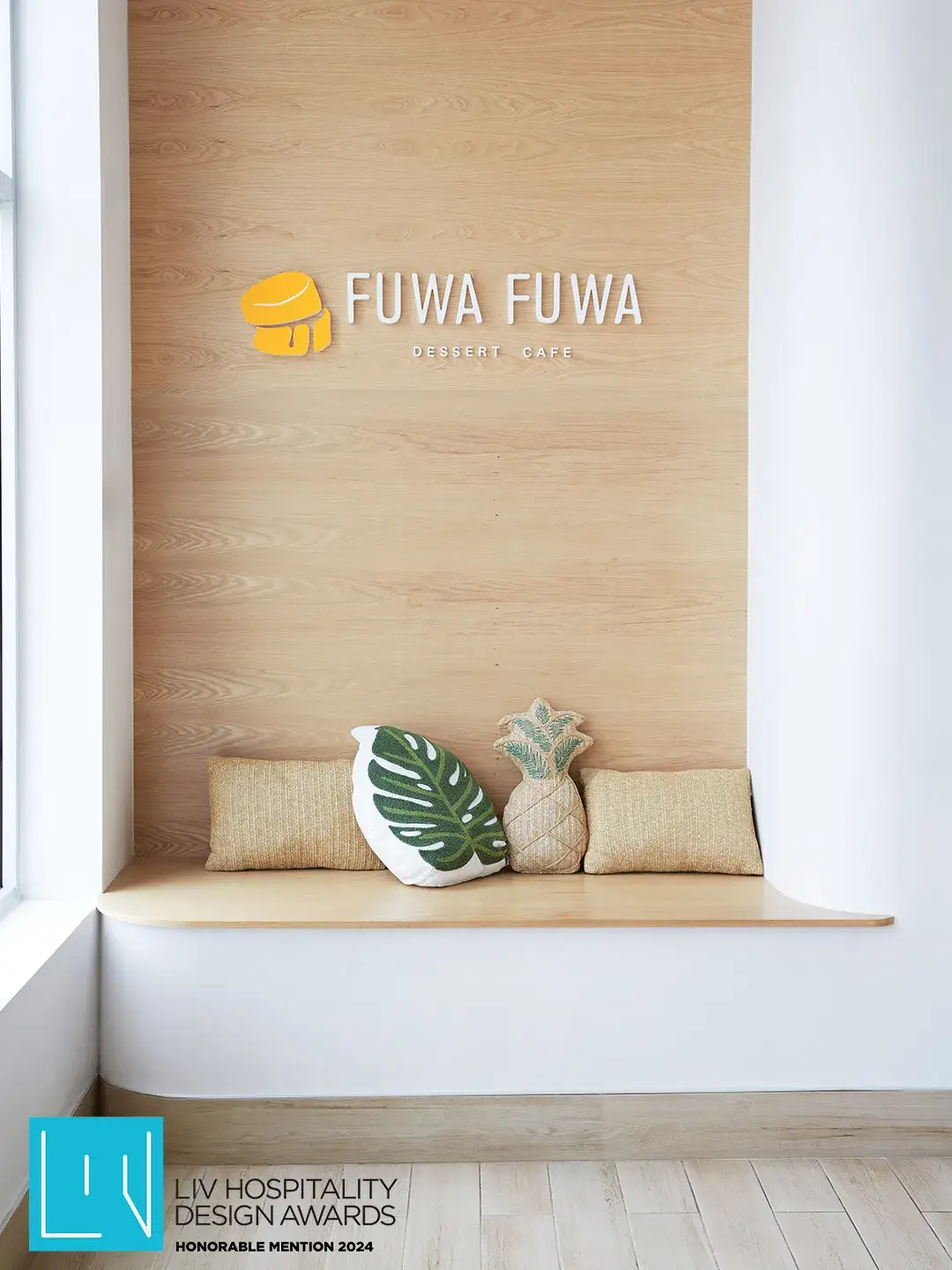
Franchisees work inside a brand book, and that is workable. At Fuwa Fuwa we applied the brand's colours, materials and finishes to that site's specific conditions and produced drawings that met both franchise and local requirements. It earned a LIV Hospitality Design Award Honorable Mention. Brand standards and award-level design can live in the same room.
On the budget split I give every operator the same rule. Put 10 to 20% of the interior budget into the feature wall or logo moment your customers photograph. That is your three-second wow effect and your organic marketing. The rest goes to layout, flow and operations, and we never compromise the function. Richmond Hill collected three international honourable mentions on that formula, and those awards travel with you into the next lease negotiation.
Where Should Restaurant Operators Save and Spend During Build-Outs and Overseas Sourcing?
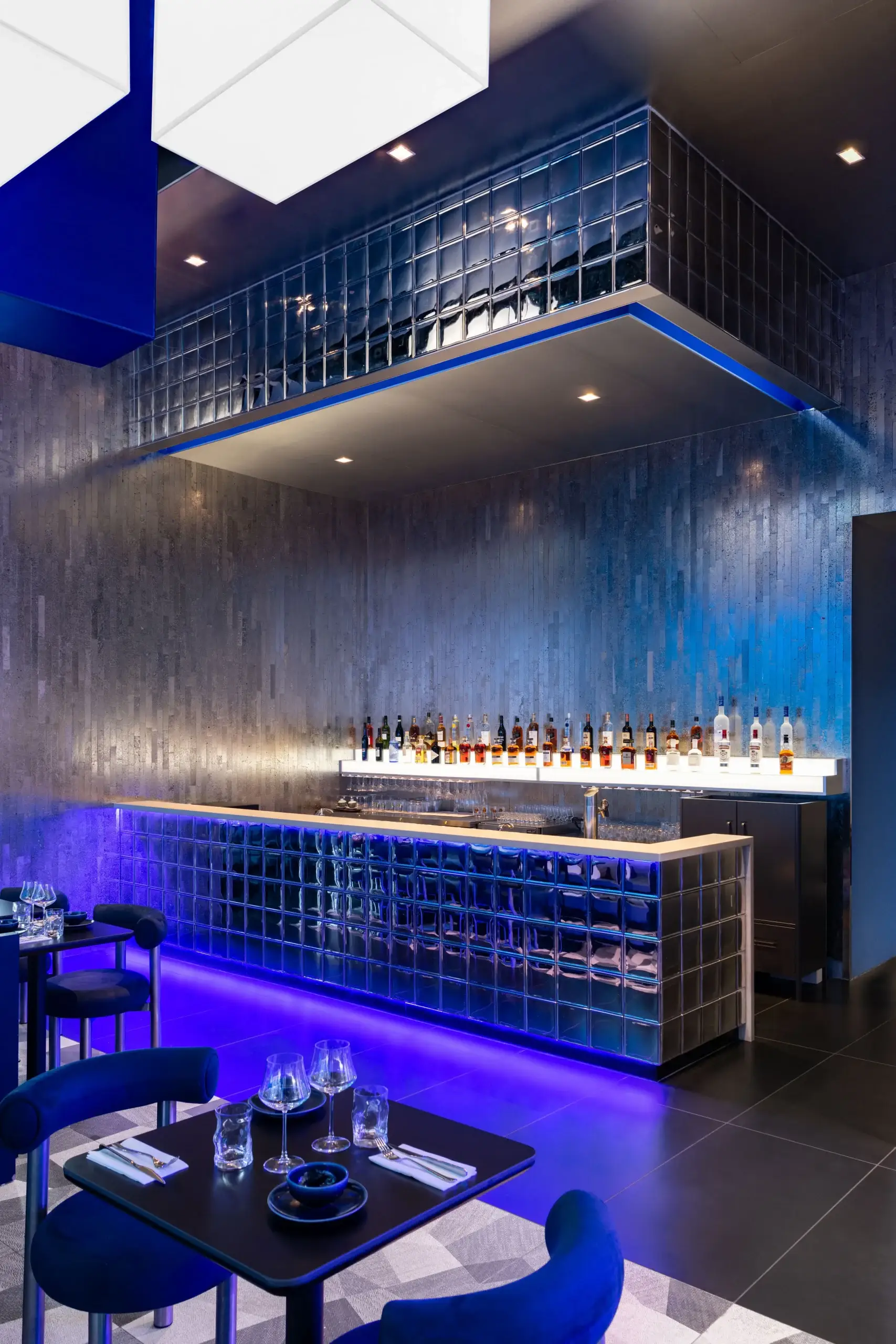
Every space should sing and dance. A restaurant also has to open on the date you promised, and every seat has to earn its rent. Overseas sourcing can take a third or more off the custom pieces that make the room yours. It only works when the person running it knows the duty line, the certification mark, the sailing date and the factory's language. If you are about to sign a lease on the next location, bring us in first. We will check the electrical panel capacity and the floor coring, and we will tell you where you can save and where you must spend.
Frequently Asked Questions
How do we guarantee overseas factories match rigid franchise color standards?
We bypass digital screens entirely. Factories must match physical RAL or Pantone swatches and ship control samples to Toronto. Mass production of your franchise millwork never begins until we approve that physical finish under actual site lighting. There is zero room for interpretation.
How do currency fluctuations impact the final landed cost of our custom millwork?
It shifts your baseline. For customs valuation, the CBSA bases the exchange rate on the date the goods begin their direct, uninterrupted journey to Canada, not your deposit date. If the dollar weakens during production, your final duty and GST liabilities will increase.
What documentation must multi-location operators keep after importing restaurant fixtures?
As the importer of record, your corporate liability continues after opening. Under CBSA regulations, you must retain all commercial shipment records – including origin, purchase, value, and import details – for six years after import. We compile this into a standardized digital binder for your finance team.
How is logistics managed when sourcing restaurant fixtures from multiple overseas workshops?
You never pay to ship empty space. We direct all goods to a consolidation warehouse in Guangdong. Your custom seating, metal showcases, and millwork are strategically packed into a Full Container Load (FCL) to maximize efficiency and minimize port-to-port transit costs to Vancouver.
How do we recover if custom overseas restaurant furniture arrives damaged?
Prevention is our primary strategy, requiring strict export-grade crating before loading. If damage occurs in transit, we never wait on factory replacements. We instantly leverage our local network of Toronto millworkers to repair or modify the piece on-site, ensuring your grand opening date never moves.