The first time I truly felt the commercial power of design, I was standing under a half-finished coffered ceiling in the future lobby of the St Regis. It was 3 a.m. We had just rewired the lighting controls because the atmosphere still felt clinical, like an airport lounge trying too hard to dress in marble.
An electrician flipped the breaker, the lamps warmed, and suddenly the space inhaled. Candle-toned cove lighting grazed the plaster curves, drawing your eye toward bronze inlays that echoed the skyline beyond the glass doors. A bellman who had wandered in to check the schedule simply stopped, looked up, and whispered, “Oh.”
That single vowel was worth every missed dinner. It was proof that when a space finally sings, it changes human behavior. He walked slower, he stood taller, he reached for his phone to capture the moment.
I share this because it frames the entire conversation we’re about to have. If you think trends are just decorative trivia, they are not. They are the chords and rhythms that let a place make people whisper Oh – and keep them spending, staying, or working with deeper commitment. So let’s walk through the top commercial interior design trends I see shaping 2026.
Trend #1. Narrative Is the First Line Item on Your P&L
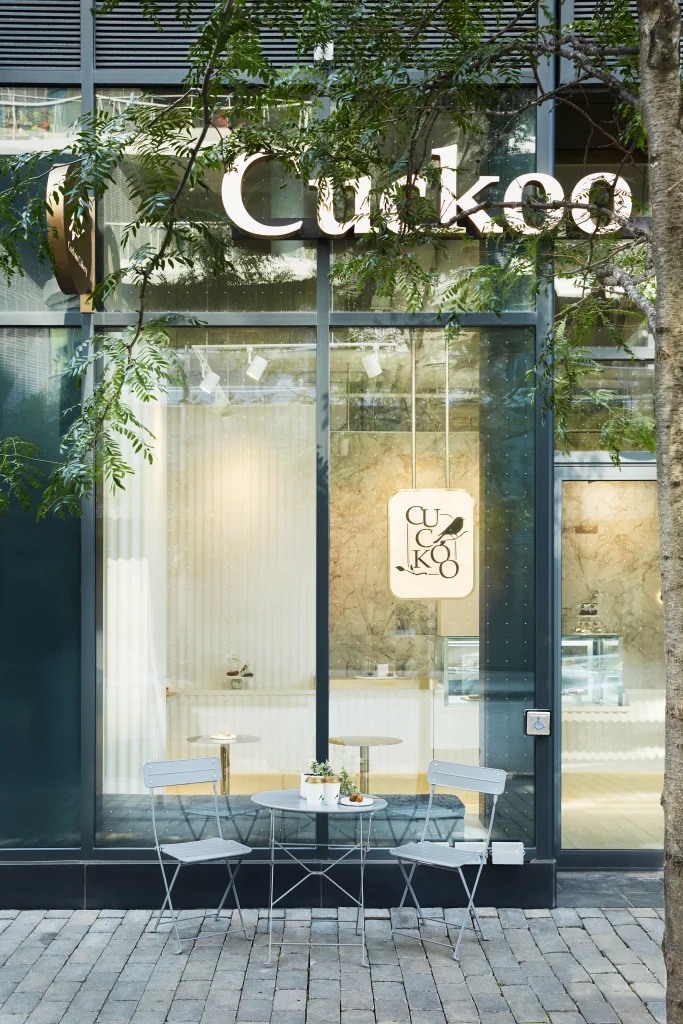
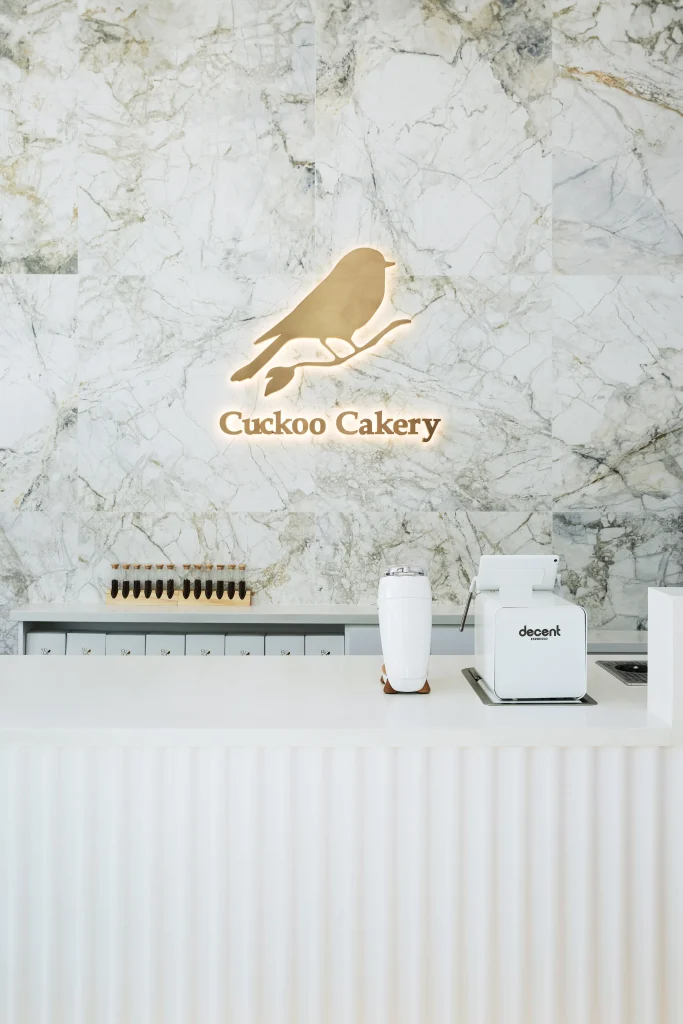
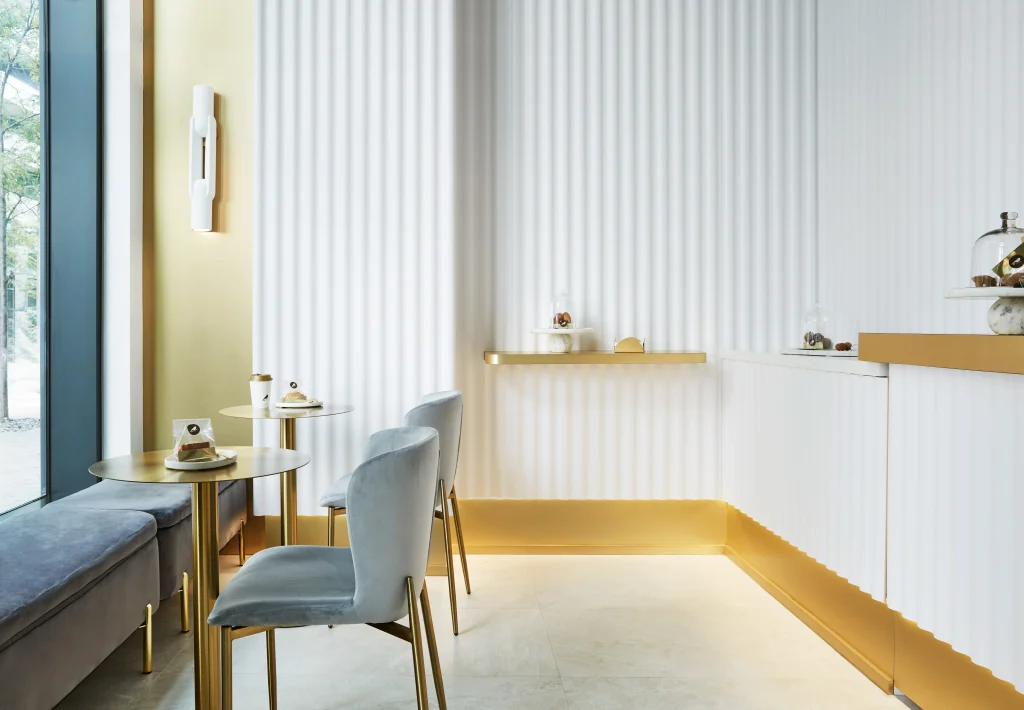
A beautifully located cafe in downtown Toronto recently asked us to diagnose why its 35 tables were rarely more than half full. The food was outstanding, the service warm, the Instagram feed energetic. Still traffic lagged.
The issue was a lack of narrative. The interior read like a catalogue: generic subway tile, Edison bulbs, slab tables. Customers couldn’t recall the room an hour later, so they never told friends to visit. The space had no narrative hook – nothing to provoke that instinctive urge to describe rather than merely mention.
At Dexign Matter we begin every commercial brief with a narrative workshop. We’ll ask questions like:
What song is this brand?
What time of day does it live in?
If it were a dessert, is it custard-smooth or granita-crisp?
These textures and tempos evolve into a palette of materials, light levels, acoustics, and circulations that read as a single sentence in three dimensions.
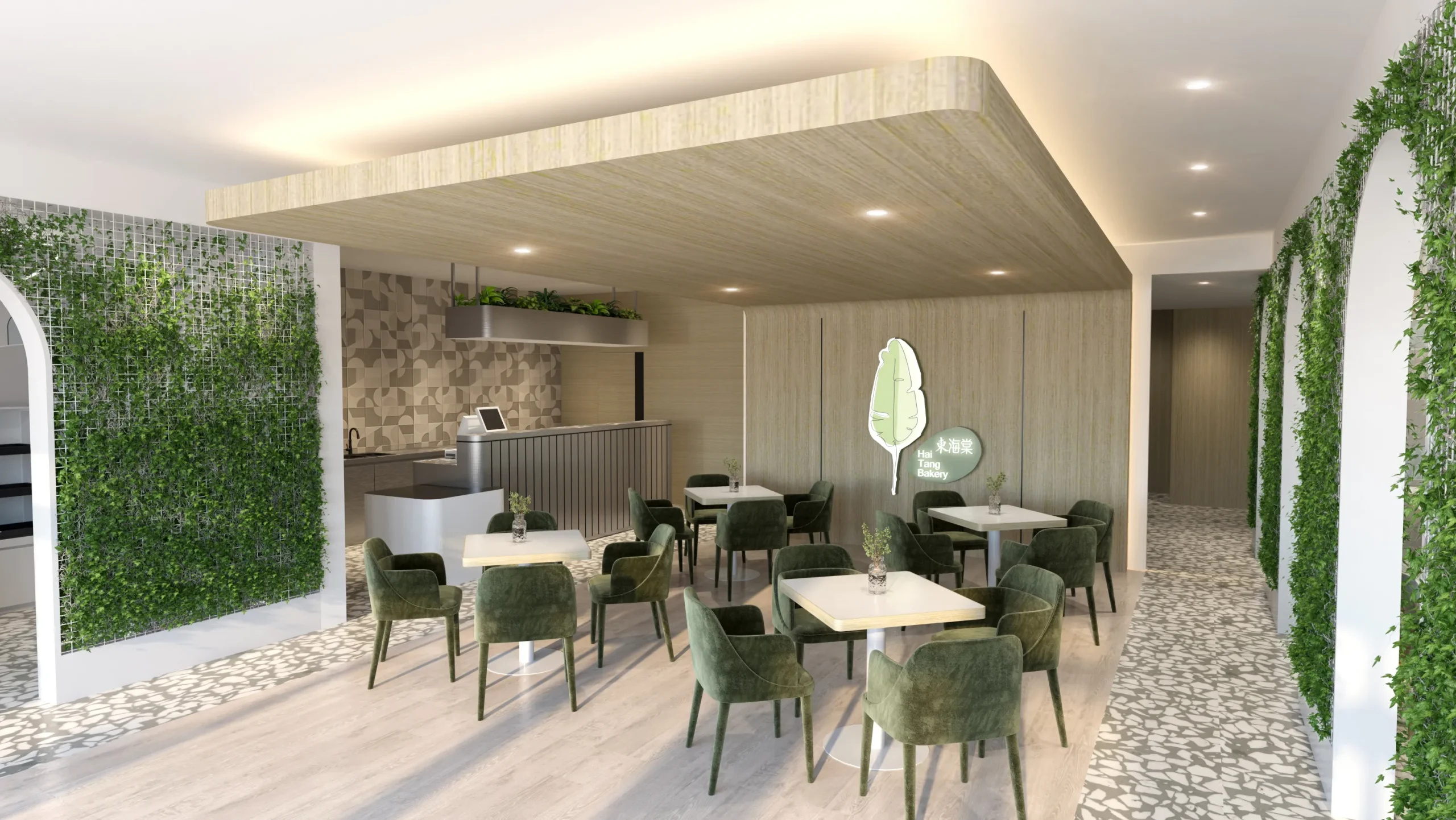
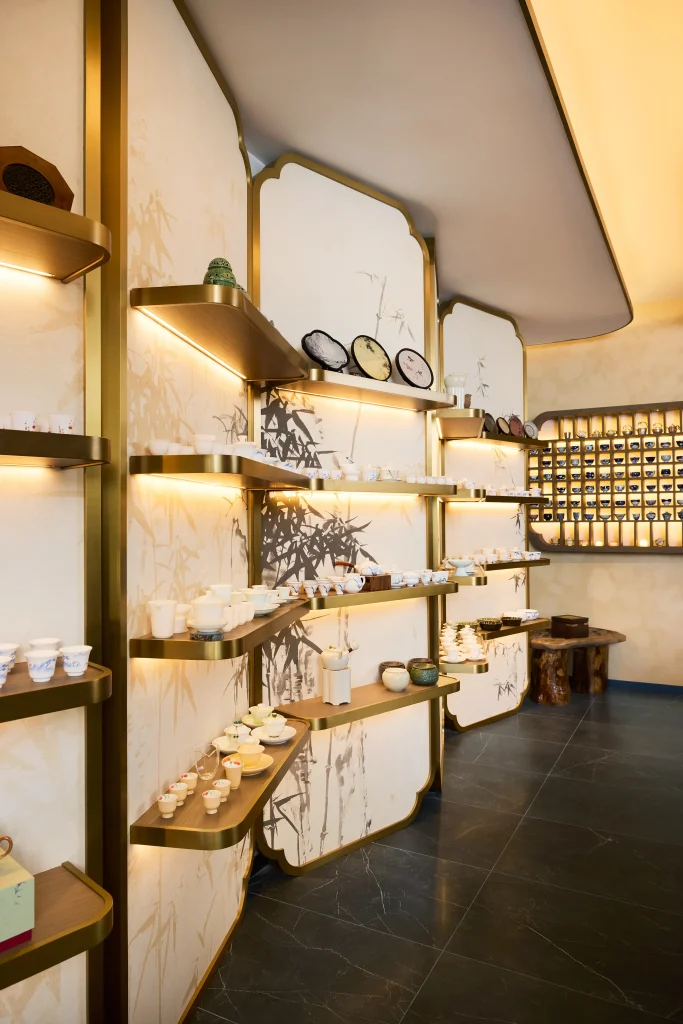
For the cafe, the owner told us his grandmother rolled dim-sum skins by the window of a Shanghai lane house, sunlight flickering through bamboo shutters. That image became our thesis. We proposed to translated bamboo slats into a kinetic ceiling grid that dapples light across terrazzo counters, speckled like flour on stone.
In 2026 the hottest finish is meaning. Start there, or everything else is wallpaper.
Trend #2. Human-Centric & Neuro-Inclusive Design as an HR Strategy
Walk through any legacy office and you’ll spot the signs: earbuds jammed in to drown the HVAC roar, employees pacing corridors for a private call, the last cubicle turned into an improvised nap zone. These are spatial symptoms of a deeper ailment – environments that misunderstand physiology.
Focus tasks collide with chatter
Lighting flickers between migraine-white and dungeon-dim
Neurodiverse staff spend cognitive energy simply coping
In 2026, we’ll treat the office like an organism with multiple metabolisms. Quiet pods soft enough that you hear your own thinking. Collaboration lounges, wrapped in breathable hemp upholstery, invite conversation at 3000k of warm white. Transition thresholds – just three steps of corridor with adaptive LEDs – let brains recalibrate between zones, lowering sensory whiplash.
If a mid-size firm retains even a few senior engineers who’d otherwise quit, the salary savings eclipse the line item by a factor of five. You can think of interior design as risk mitigation.
Trend #3. Flexible, Hybrid-Ready Workspaces That Earn Rent Seven Days a Week
Hybrid work has frozen some office corridors in time – desks left exactly as they were thrust into remote limbo in 2020. Still rent cheques still clear every month. How do we extract value from footage that behaves more like a pop-up than a permanent settlement?
A static office plan can feel deserted on Mondays and overcrowded on Wednesdays. Wasted square footage erodes profit, but shrinking too far limits growth.
In 2026, we’ll borrow from theatre. The stage is constant. The set changes fast. Demountable partitions glide on recessed tracks. Desking “rafts” are wired by floor grilles on one-meter grids, so IT can unplug and shift an eight-person table before lunch. Zones dim or intensify depending on occupancy data.
Trend #4. Biophilic Design That Moves Beyond Pot-Plants-as-Props
An early retail client once asked, “Can we just put two fiddle-leaf figs at the entry? That counts as biophilia, right?” It does not. Shoppers can smell tokenism fast.
Shallow greenery feels gimmicky, delivers no health benefit, and turns crispy under ductwork glare. Worse, it signals inauthentic sustainability – a brand liability in 2026.
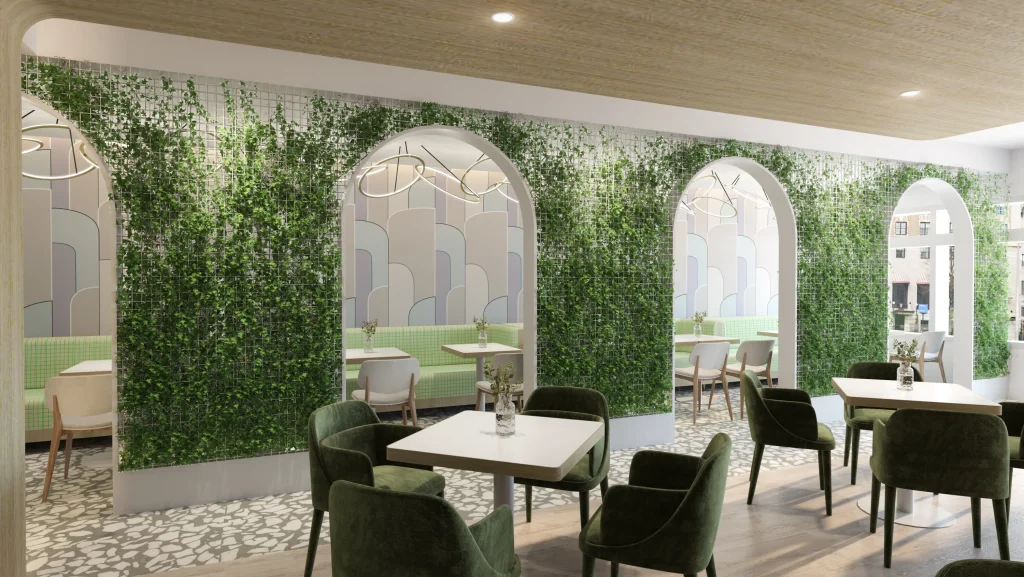
Forget decorations. In 2026, we’ll engineer living systems. Picture a facade folded inward, forming an internal courtyard where low-light moss walls scrub VOCs. Picture micro-herb planters integrated into bar die-walls so the mixologist snips mint to garnish your drink. Daylight is the prime contractor.
A luxury retailer once invested millions in marble, only to discover the boutique felt… sterile. The missing layer was audible: footsteps echoed off hard surfaces, stripping intimacy from the brand’s otherwise sensual story.
One dominant sense outshouts the ensemble. Customers disconnect.
Design like a composer.
Acoustics first: felted ceiling rafts hover like origami, their folds tuned to specific frequencies (human speech averages 250 – 1,000 Hz. We dampen that band first).
Lighting follows circadian rhythm – 4000K alertness in the morning, sliding to 3000K toastiness by evening. Sub-aural soundscapes – crisp leaves underfoot in a nature-themed cowork space, or subdued city hum in an airport lounge – anchor mood.
Finally, scent: a chilled diffuser pulses cedar, bergamot, or matcha at 15-minute intervals so the nose notices absence when it pauses, a powerful mnemonic trick.
Run a content calendar for scent and playlist the way you would for window displays. Sensory storytelling thrives on gentle evolution.
Trend #6. The Fifth Wall as Social-Media Magnet and Acoustic Hero
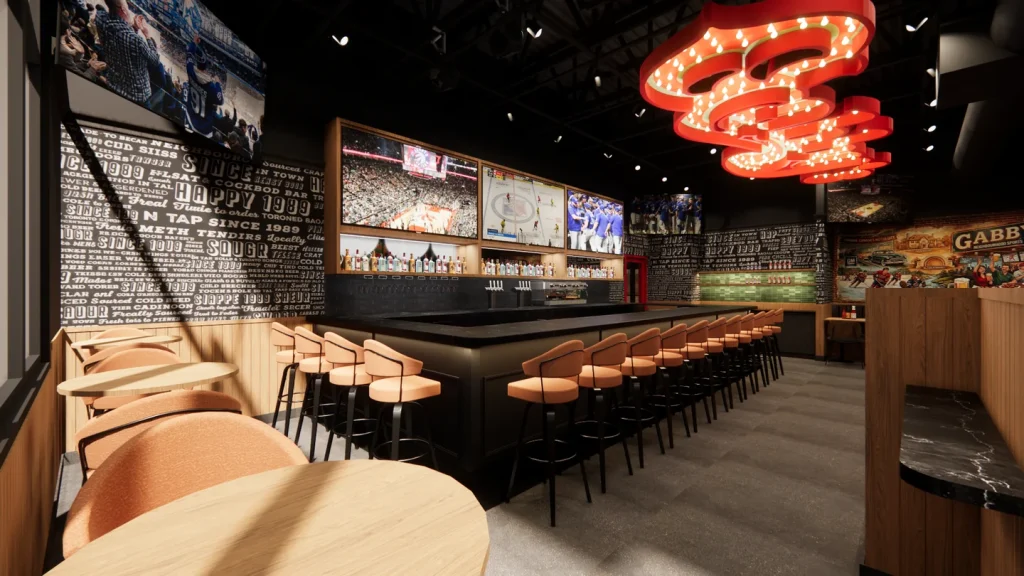
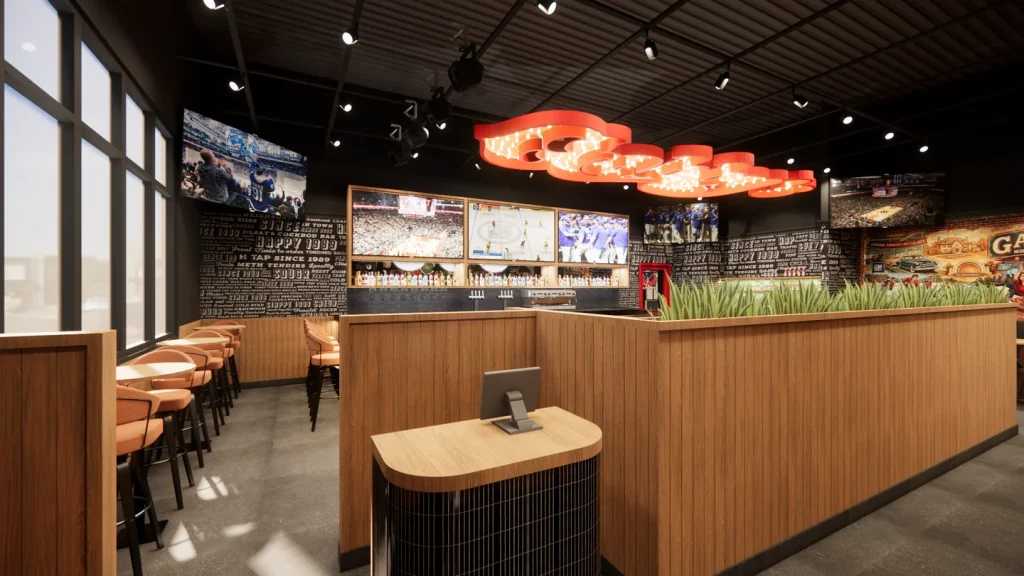
While working on the new restaurant and bar project, Gabby’s Oshawa, I walked into the space, looked straight up, and said, “There’s your billboard.” Ceiling planes are unclaimed real estate – we can transform them into brand equity without sacrificing valuable floor area.
90% of commercial ceilings remain blank or cluttered with mechanical grilles. They neither direct traffic nor capture imagination.
Think of the ceiling as choreography. In a food hall we suspended scalloped timber baffles in concentric rings over each vendor cluster. From eye-level, the curves gesture you toward ramen or tacos without a single sign. The timber also absorbs clatter, keeping reverberation near the restaurant sweet-spot of 0.7 seconds. At night, RGBW lines embedded in every third baffle shift hue to match vendor trademarks – a live, luminous map for new visitors.
Pair warm wood slats with cold-rolled steel kick plates down below so patrons feel grounded still uplifted – the yin-yang of tactile storytelling.
Trend #7. Selling Experience First, Product Second
Once, you entered a store to buy, a cafe to sip, a hotel to sleep. In 2026, these categories braid together. Customers crave scenes, not just services, because scenes generate share-able memory.
Separate operational silos inherently mean duplicated overheads, complicating logistics and elevating utility costs unnecessarily. When a boutique fails to incorporate a comfortable lounge area, it dramatically limits the critical upsell dwell time required for considered purchases. Similarly, a hotel lobby lacking curated retail integration sacrifices significant revenue from immediate, high-margin impulse spends that thrive in transitional spaces.
Staff uniforms adapt too – baristas slip on an apron panel that snaps off to become evening bartender attire. Physical storytelling extends to garments, reinforcing thematic unity.
The 2026 Commercial Interior Designer’s Lab
Designers love concept phase because it’s pure possibility. Still for clients, the magic happens only when that possibility survives budget, code, and the chaos of construction. Here’s how to guide projects from scented notion to profitable reality in 2026.
1. Discovery & Immersion
Ask your client to bring artifacts – their playlist, their grandmother’s recipe card, the stone they pocketed on holiday. These fragments reveal emotional truth much faster than spreadsheets.
2. Story Boarding
Distill artifacts into a one-page narrative. If a material, layout, or faucet doesn’t feed the story, it’s out. Brutal? Yes. Effective? Always.
3. Sensory Drafting.
Write lighting scenes like haiku – 12 words each, one for every hour of the day. The mechanical engineer receives these alongside lux numbers, so technology serves feeling, not vice versa.
4. Carbon & Cost Modelling.
In tandem, calculate embodied carbon and cash. Trade-offs become explicit: perhaps a reclaimed-oak wall costs more today but saves landfill fees later and earns LEED credits that unlock municipal tax relief.
5. Construction Theatre.
Weekly site walks ensure the rough-in conduit respects the eventual art install. I’ve been known to stop a drywall crew mid-screw to adjust a stud by 30 millimeters because that alignment might be the axis on which your Instagram moment pivots.
Conclusion: Guangzhou Mornings, Toronto Evenings
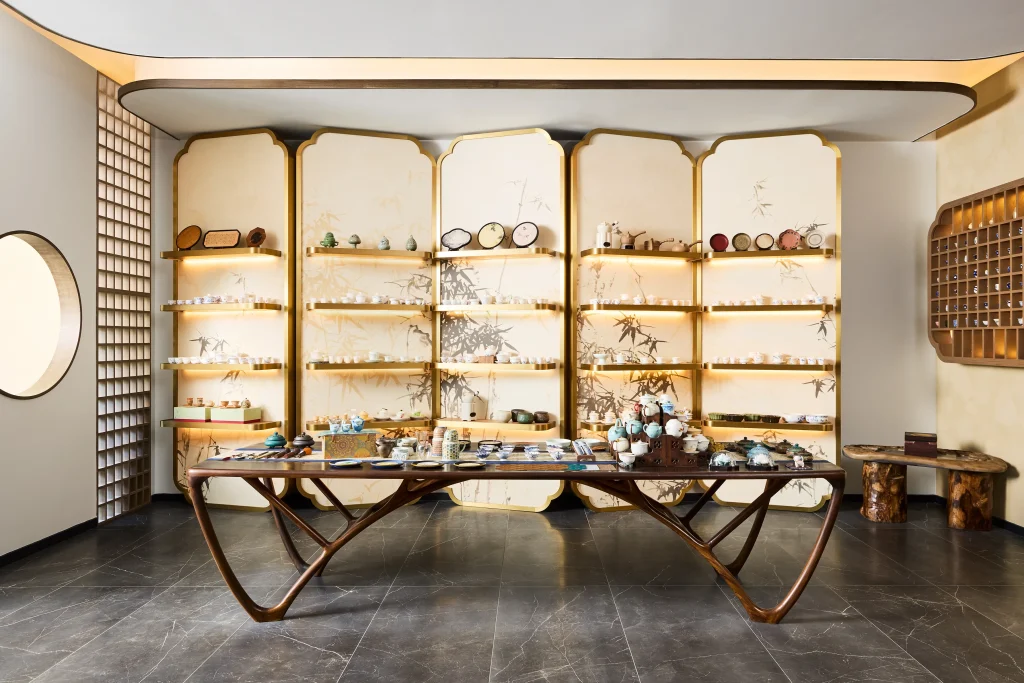
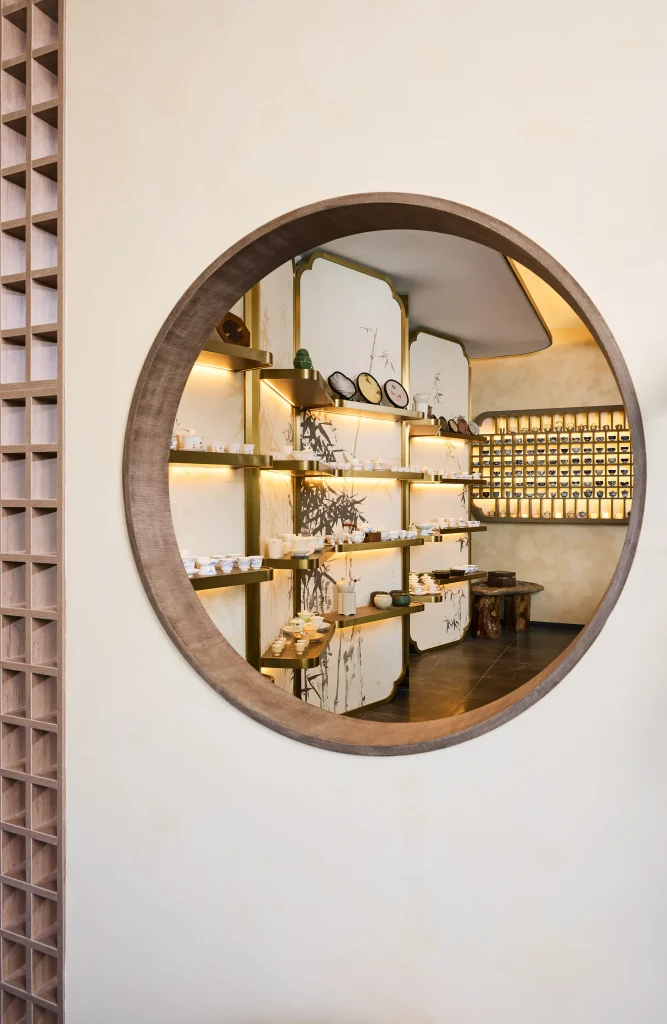
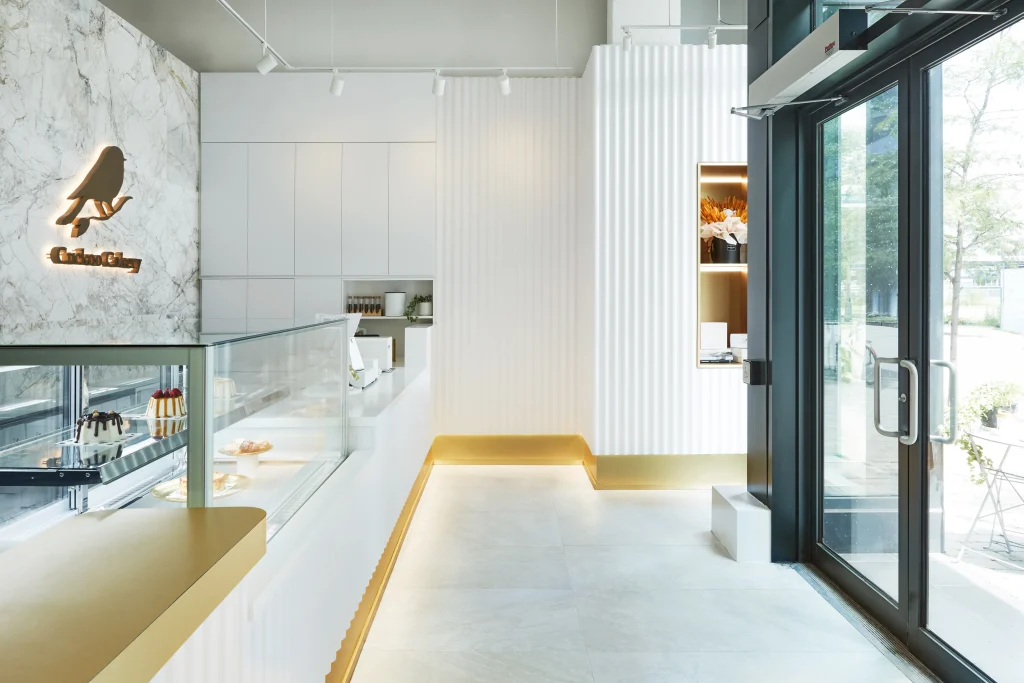
I grew up watching dawn spill down the laneways of Guangzhou, turning concrete apricot before the heat set in. Even now, on a winter evening in Toronto, I chase that softness – through warm timber ceilings, through 3000K LEDs, through the hush of felt walls that let a guest hear her heartbeat. Every project, from a Charmed Aroma flagship to a tiny basement speakeasy, is my attempt to bottle that early-morning promise: the sense that a day, a business, a life could begin fresh right here.
If you’ve read this far, you’re probably the sort of entrepreneur who understands that a space is not an empty box but an instrument. Tune it well and revenue becomes music. Leave it untuned and no marketing budget can make it sing.
So let’s tune. Let’s choose materials the way chefs choose salt – sparingly, purposefully, with respect for what each grain can unlock on the tongue. Let’s choreograph light and shadow so patrons linger without knowing why. Let’s hang narrative from the ceiling, anchor it in the floor, scent it, score it, and finally step back to listen for that whispered Oh.
Because when your customers exhale in delight, the balance sheet inhales. That, to me, is the perfect design solution. And I can’t wait to craft it with you!
FAQs
Do sustainable interior design certifications actually improve financial performance?
Absolutely. Beyond ethical branding, eco-conscious spaces drive tangible returns for investors. A Cornell study reveals that LEED-certified hotels command higher daily rates compared to non-certified peers. In commercial interior design trends 2026, sustainability is a profitability lever.
How do I prevent my 2026 commercial interior design from looking outdated in a few years?
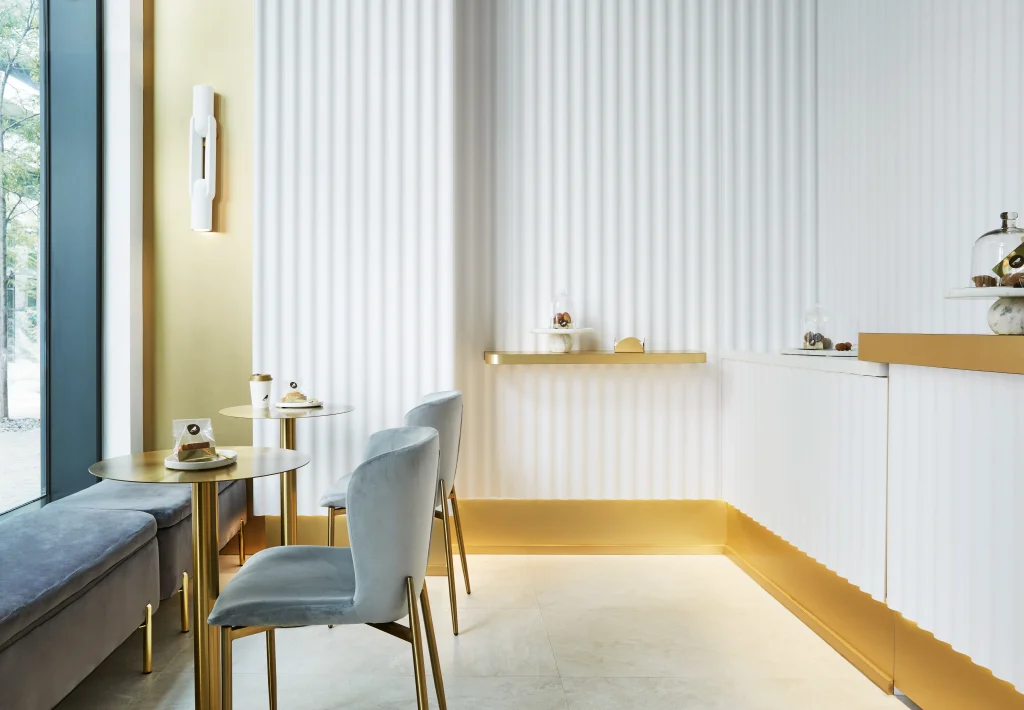
The key is distinguishing fleeting fads from macro-movements. Leading commercial interior design trends 2026 prioritize authentic materials – stone, wood, brass – over gimmick finishes. We anchor your space in “brand truth” rather than Pinterest aesthetics, ensuring the design ages into a classic asset rather than expiring like a fast-fashion trend.
What is the ‘Resimercial’ movement and why does it matter for my business?
“Resimercial” blends residential comfort with commercial durability. As we approach commercial interior design trends 2026, guests and employees demand the softness of home – plush seating, warm lighting, and rugs – within public spaces. This approach increases dwell time and reduces the sterility often associated with corporate or retail environments.
Which color palettes are dominating the 2026 commercial interior design?
We are seeing a departure from “tech-minimalist” greys toward “Dopamine Decor” and earthy grounding tones. Commercial interior design trends 2026 favor terracotta, deep moss, and warm ochre to evoke emotional safety and optimism. These hues engage the user psychologically, encouraging connection and relaxation rather than clinical detachment.
How should we allocate capital to maximize visual impact?
Invest heavily in “high-touch” zones. The strategy for commercial interior design trends 2026 involves spending 60% of the budget on eye-level elements – lighting, furniture, and art – where users physically interact with the brand. Save on concealed infrastructure. This “tactile spending” ensures the highest perceived value and customer satisfaction.
Why is hyper-local sourcing becoming a critical design requirement?
Global supply chains are being replaced by community craftsmanship. Clients value the narrative of locally forged iron or regional timber. Among commercial interior design trends 2026, “hyper-localism” reduces carbon footprints while anchoring your brand in its specific geographic context, creating a unique sense of place competitors cannot copy.
Is minimalism dead in high-end commercial spaces?
Sterile minimalism is fading. “Curated Maximalism” is rising. This doesn’t mean clutter, but rather rich textures, layered patterns, and bold storytelling. Commercial interior design trends 2026 encourage spaces that feel collected and full of personality, offering a visual feast that encourages social sharing and exploration.
How are restorative spaces being integrated into non-hospitality sectors?
Wellness is no longer just for spas. Offices and retail centers now include “decompression zones” – low-stimulus rooms for prayer, meditation, or deep focus. A major shift in commercial interior design trends 2026 is acknowledging mental health by providing acoustic privacy and visual calm within high-traffic environments.
Is adaptive reuse a smart investment for luxury brands?
Yes. Transforming heritage buildings offers instant character that new builds lack. Adaptive reuse aligns with commercial interior design trends 2026 by merging historical architecture with modern amenities. This contrast creates a sophisticated, “lived-in” luxury that appeals to affluent demographics seeking authenticity over manufactured perfection.